What Causes It Around Here
Most of the housing stock we work on in this area went up between 1976 and 2002, with the bulk of it dating to the late 1980s. That matters for openers because it's the window when chain-drive units with plastic drive gears and standard capacitor-start motors were the default install. Those gears wear down to a nub after 15-20 years of daily cycling, and nobody replaced them when they replaced the door or the springs. On top of that, this is a moderate-heat climate band, which means garages here spend a lot of summer hours sitting well above outdoor temperature. Heat is hard on opener logic boards and on the start capacitors that kick the motor over - capacitors rated for a cooler attic or garage don't last as long when they're baking for months at a stretch. We see openers fail here less from a single dramatic event and more from slow heat-cycling fatigue: solder joints crack, capacitors swell, and the gear finally strips on an ordinary Tuesday. If your opener is original to a house from that 1976-2002 build window, it's not a question of if the gear or capacitor goes, it's when.
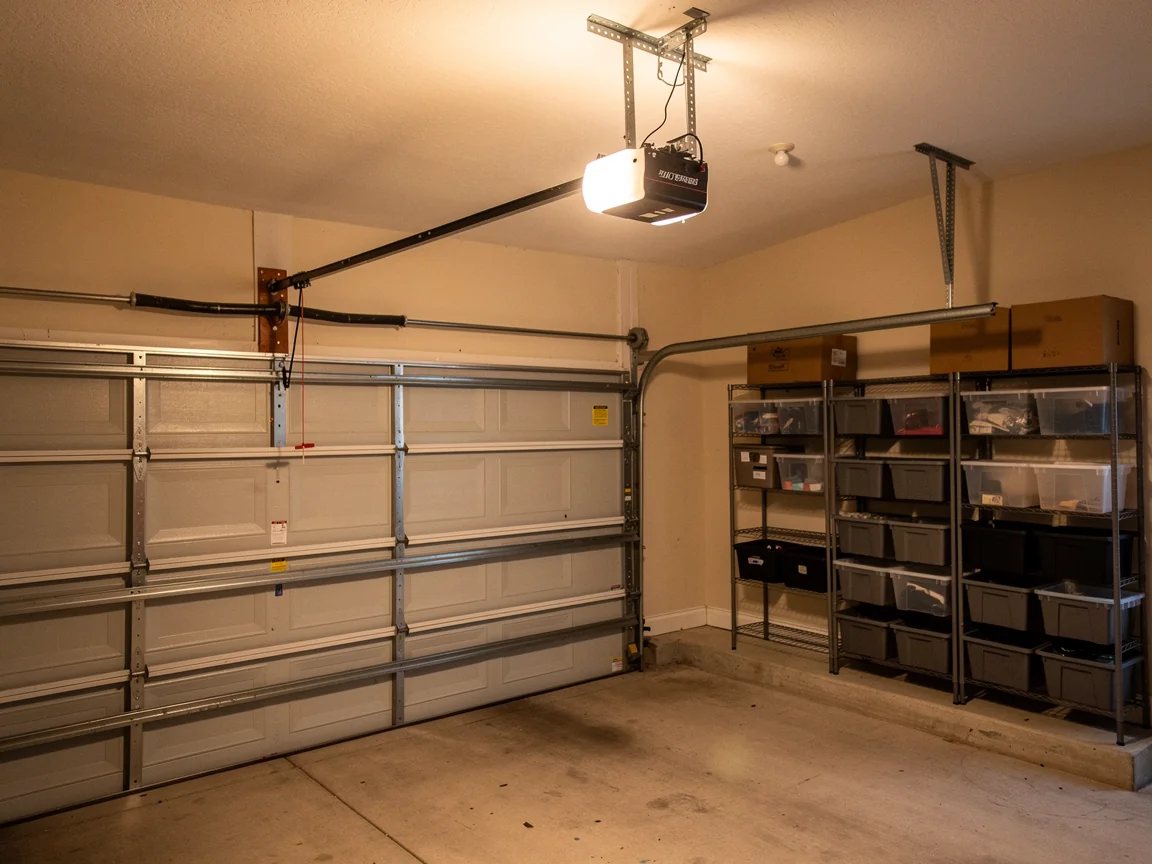
Stocked Parts
Because so much of the opener stock in this area traces back to the same 1980s-90s build period, we carry the drive gears, capacitors, and circuit boards that fit those units on the truck, not on backorder. That includes the plastic and nylon drive gears that fail most often in chain-drive openers from this era, standard run and start capacitors sized for residential 1/2 and 3/4 horsepower motors, and logic boards for the handful of opener brands that dominated installs across two named pockets of the area during that build window. We also keep wall control stations and safety-sensor pairs on hand since those get swapped out alongside a board more often than not. What we don't stock is anything specific to opener models made after the mid-2000s with smart-home boards or belt-drive assemblies unique to a single manufacturer's newer line - those parts have longer lead times and we'll tell you upfront if your repair falls into that category instead of promising a same-visit fix.
What You Are Seeing
A stripped gear usually shows up as a motor that hums and runs but the trolley doesn't move, or a door that opens a few inches and stops.
Capacitor failure in heat
A failing capacitor looks different: the motor tries to start, clicks, and then does nothing, especially on a hot afternoon when the garage has been closed up all day.
Cracked logic board behavior
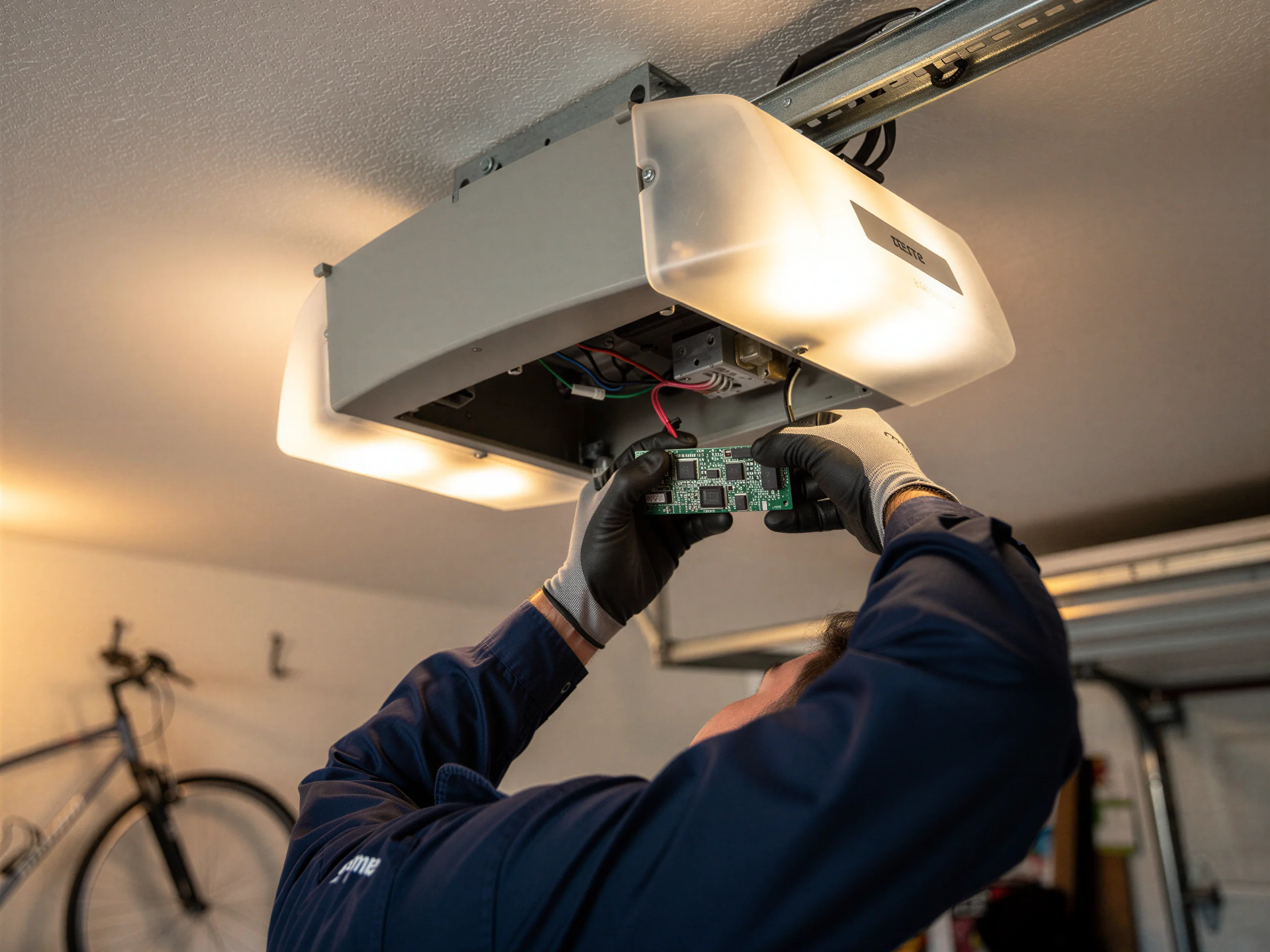
A cracked logic board can cause random behavior - the opener fires on its own, the remote works intermittently, or the wall button does nothing while the remote still fires the motor.
Burning smell or buzzing
If you're getting a burning smell or a faint buzz with no movement at all, that's almost always the capacitor or motor winding, not the gear. None of these are safety-sensor issues, so don't waste time realigning the little eyes at the bottom of the track before checking the motor unit itself.
How We Fix It
For a stripped gear, we replace the gear and sprocket assembly, not the whole opener, assuming the motor and board test out fine - that's usually a straightforward swap. For capacitor failure, we test the motor windings first; if the motor's fine, it's a direct capacitor replacement. A cracked or heat-damaged board gets replaced as a unit rather than repaired, since boards aren't something you solder back together reliably in the field. Where we draw the line: if the opener is original to a house built in the late 1970s or early 1980s and the motor itself has failed along with the board, we'll usually tell you a new opener costs less over time than stacking parts on a 40-plus-year-old unit. That's not an upsell, it's just the math on parts availability and labor for something that old.
Talk to a local pro
Garage door service in Albany?
Same-day service with honest, upfront quotes.