What Causes It Around Here
Most of the houses we get called to in this service area went up between 1976 and 2002, with the bulk of that stock dating to the 1980s and 90s across the two main residential areas we work. That means a lot of doors out there are still running on the rollers that came with the house, or a cheap swap from a decade back. Steel rollers on bare bearings don't owe anybody thirty-plus years of service, and they rarely get it.
The climate here sits in a moderate heat band, not the scorching extreme you'd get further south or west, but still enough daily heat cycling on a garage that faces the wrong direction to dry out nylon rollers and bake the grease out of steel ones faster than people expect. The door expands and contracts every day it's in direct sun, and the roller is the part absorbing that stress every single cycle, thousands of times a year.
Add in a track that's never been realigned since the house was framed, and you get the two failure modes that bring most of the calls: worn-out steel rollers rattling in a track that's taken on their wear pattern, or nylon rollers that have cracked and gone flat on one side from age and heat. Neither one announces itself with a bang. It's a slow grind that gets louder every week until somebody finally calls.
Stocked Parts
We carry the roller sizes that actually show up on doors from this era - 2-inch and 2-inch steel-stem rollers, 7-ball and 10-ball bearing rollers, and nylon rollers in the stem lengths that match torsion hardware common to housing built from the late 70s through the early 2000s. If your door is original to a house from that window, odds are good we've got the match on the truck without a special order.
We also keep the stem bearings and basic track hardware that tend to go bad alongside the rollers - after thirty-plus years, a roller rarely fails alone, and the bracket or hinge it rides in has usually taken some of the same wear.
Where we don't carry stock is doors that have been modified with aftermarket hardware that doesn't match anything standard, or rollers sized for commercial-grade track. Those jobs sometimes need a part ordered in, and we'll tell you that up front instead of guessing at a fix that won't hold.
What You Are Seeing
A worn roller usually starts as a single loud spot in the cycle - a grind or pop as the door passes a certain point in the track, often right where the roller has worn a flat side.
Jerky, hesitant door movement
Over a few weeks that one noisy spot turns into the whole door sounding rough, and you'll start to feel it too: the door hesitates, jerks, or shudders instead of gliding.
Wear marks inside the track
If you look at the track itself, worn rollers usually leave a visible pattern - shiny wear marks, sometimes a slight widening of the track where the roller has been grinding instead of rolling. Nylon rollers that have failed from age often show visible cracking or a flat spot you can see without taking anything apart.
Snapped roller stems
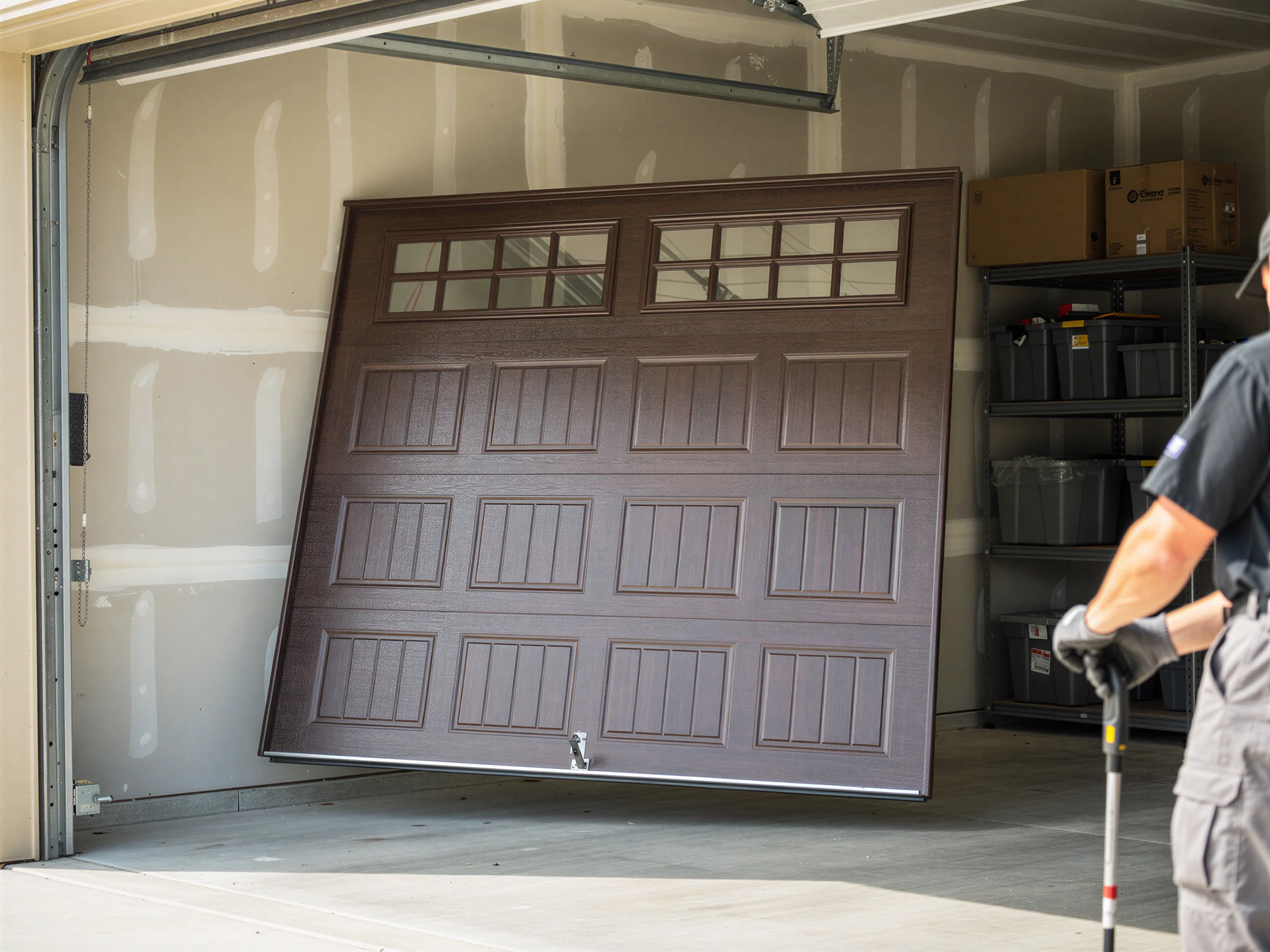
The failure that actually brings people to call, rather than just live with the noise, is when a roller comes off its track entirely or a stem snaps. At that point the door won't move smoothly, if at all, and it's usually one side only, which tells you it's the roller and not the spring.
How We Fix It
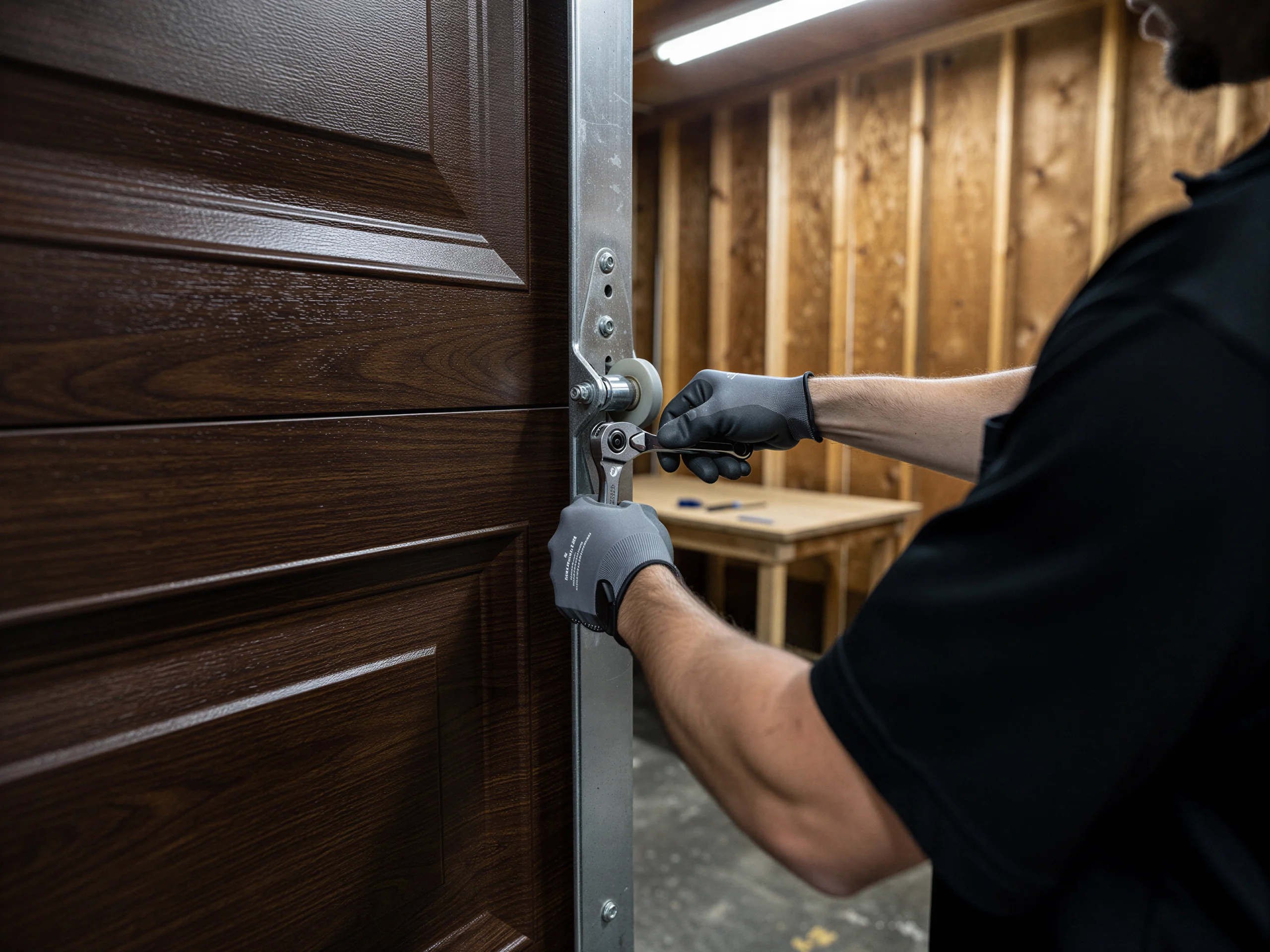
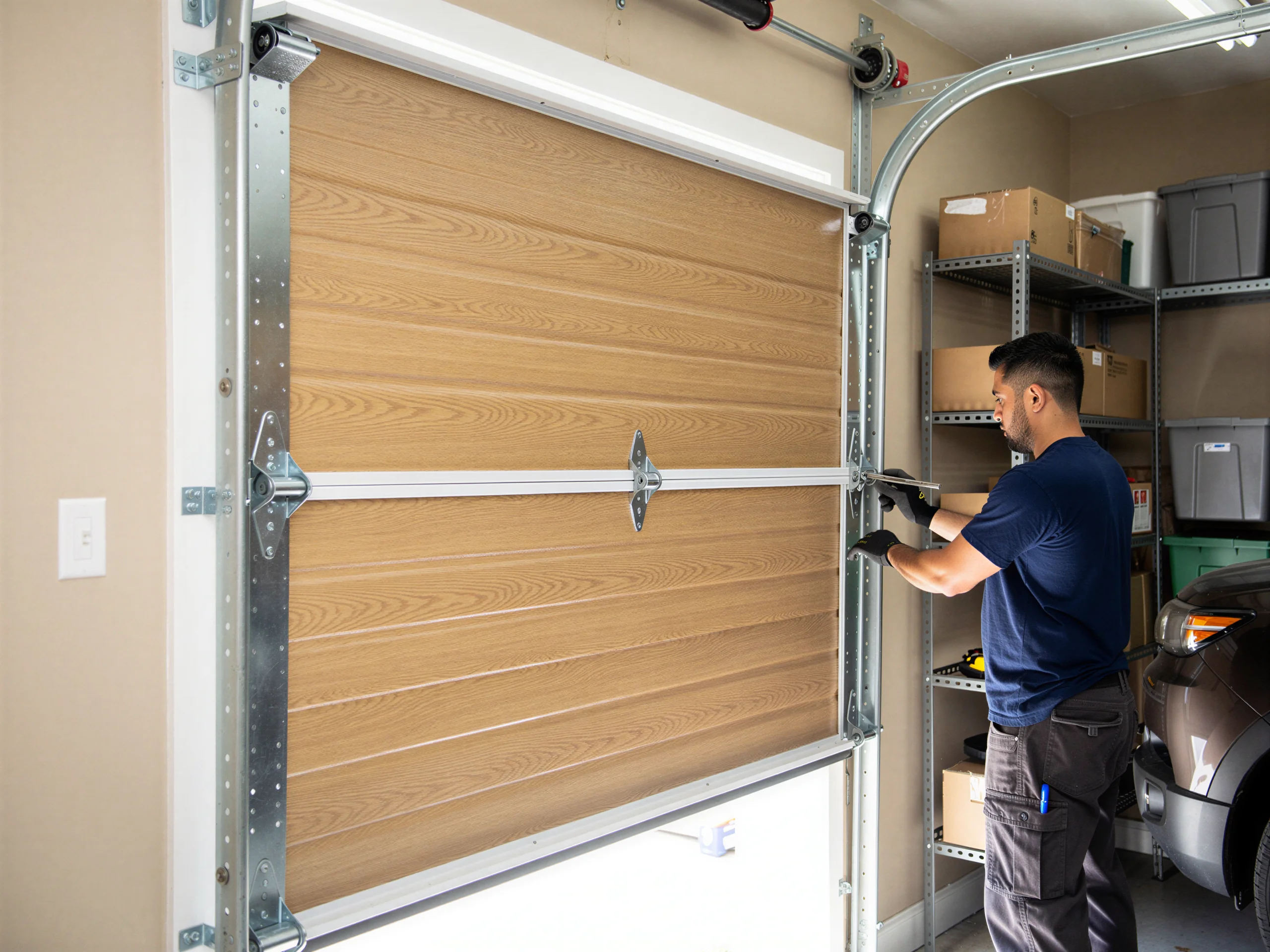
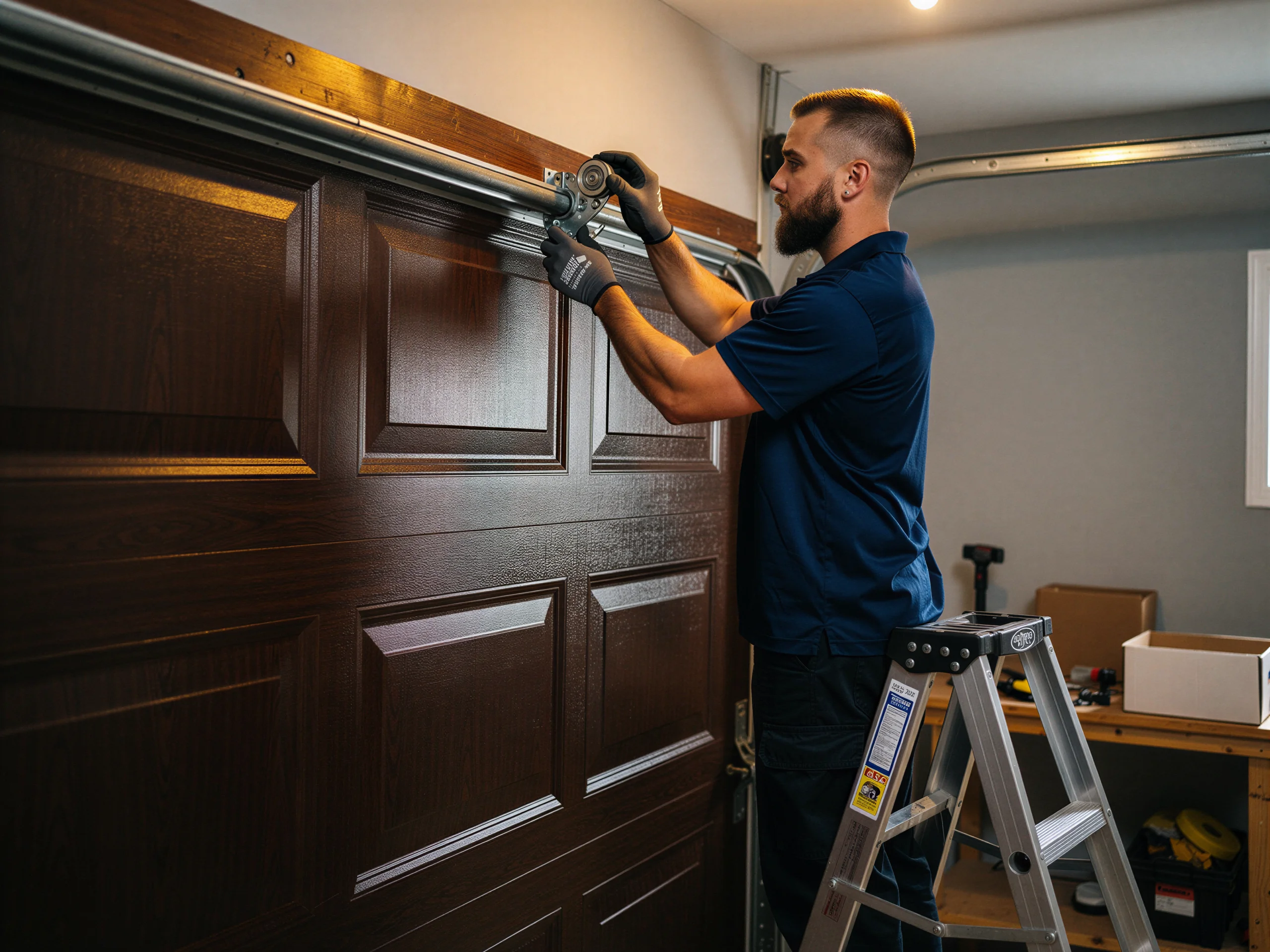
We pull the door down to a safe working position, release tension on the side we're working, and swap the worn rollers for the matched replacement, stem length and bearing count included.
Track inspection before rollers
While the door's open we check the track for the wear marks or bends that heat and age put into it, because a new roller in a chewed-up track just wears out again fast. Most roller jobs are a single visit - we're not waiting on a part that's sitting on the truck already.
Modified hardware needs fit check
Where we draw the line is a track that's bent badly enough to need full replacement alongside the rollers, or hardware that's been modified from stock; those take longer because we have to confirm fit before we order, and we won't force a roller into a track that won't hold it straight.
Undersized spring and opener strain
We'll also tell you honestly when a roller swap isn't the fix - if the opener is straining or the spring is undersized for the door's weight, replacing rollers alone just buys you a few quieter months before something else lets go.
Talk to a local pro
Garage door service in Albany?
Same-day service with honest, upfront quotes.