What Causes It Around Here
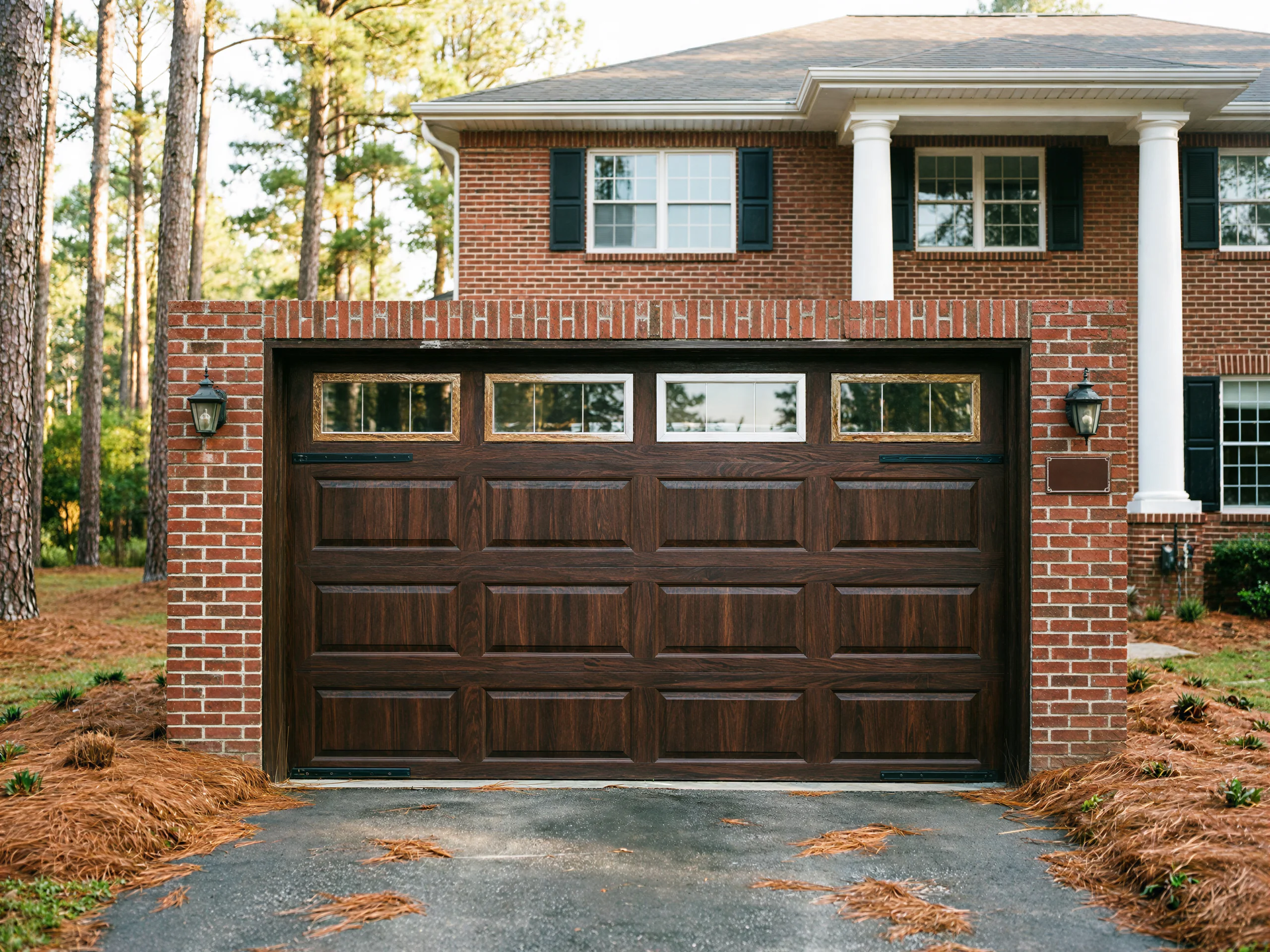
Most of the houses we work on across this service area went up between 1976 and 2002, with the typical build year landing around 1989. That means a lot of garages still carry the original steel or aluminum sectional doors that came with the house, builder-grade panels with thin skins and foam backing that was never meant to last forty years.
The climate here sits in a moderate heat band, not the kind of hard freeze-thaw that cracks concrete, but enough daily expansion and contraction on a metal panel to loosen hinge screws, pull fasteners through thin steel, and let seams separate at the corners over time. Add a mower nick, a trailer hitch backing in wrong, or a kid's bike leaned against the bottom section, and a panel that was already fatigued from twenty-plus summers gives out.
We see this most on the bottom one or two sections, since they take the physical hits, and on the top section, since it gets the most sun and the most flex when the door cycles. A door from this era usually has four to six sections, and it's rare that more than one or two are actually bad even when the whole door looks tired.
Stocked Parts
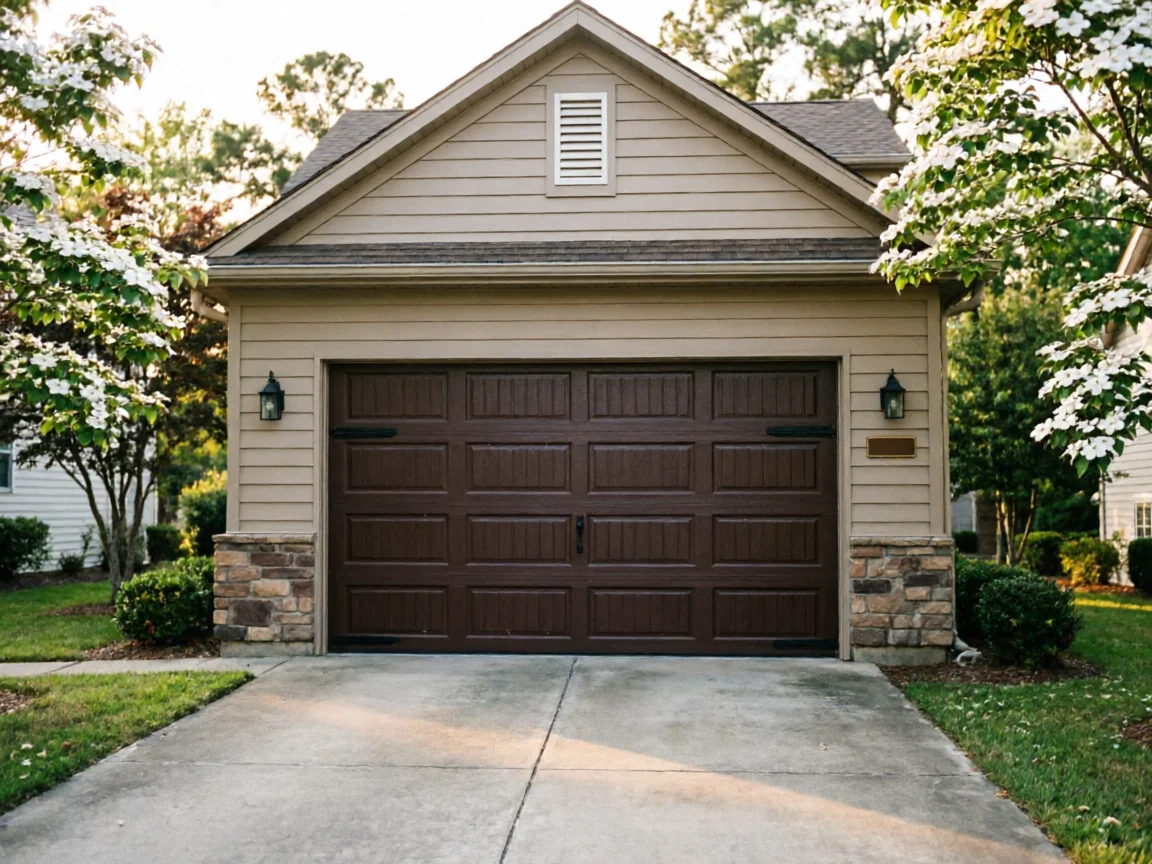
Because so much of the housing stock here dates to the 1980s and 90s, we keep common panel widths and standard steel colors on hand for that era rather than ordering one-offs every time.
Single-section swap timing
A single-section swap on a door that still matches is usually a same-visit job when we're carrying the right size. Here's the honest limit: some builder-grade doors used panel profiles that were discontinued years ago, and if your door is one of those, we can't manufacture a panel out of thin air.
Color matching on faded panels
In that case we order from what's still produced, and the new section may not be a perfect color or texture match to thirty-year-old faded steel. Sometimes it makes more sense to replace two adjacent panels instead of one, just so the mismatch isn't sitting next to its old neighbor.
Hinges and end caps stocked
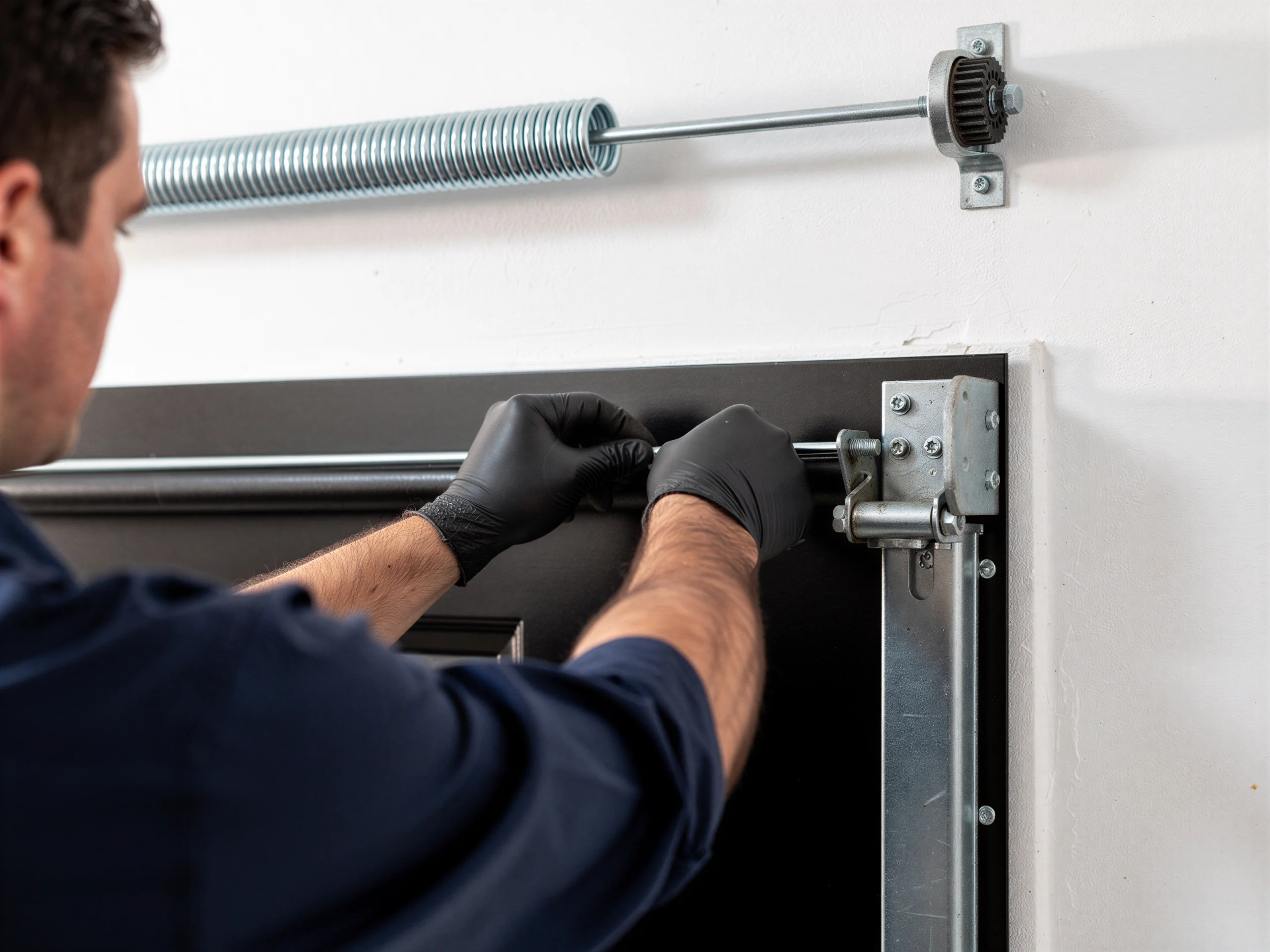
We also stock the basic hardware that fails alongside a panel, hinges, end caps, roller brackets, since a cracked panel on a door this age almost always comes with at least one stressed hinge nearby. Replacing the panel without checking the hardware around it is how you end up back at the same spot in a year.
What You Are Seeing
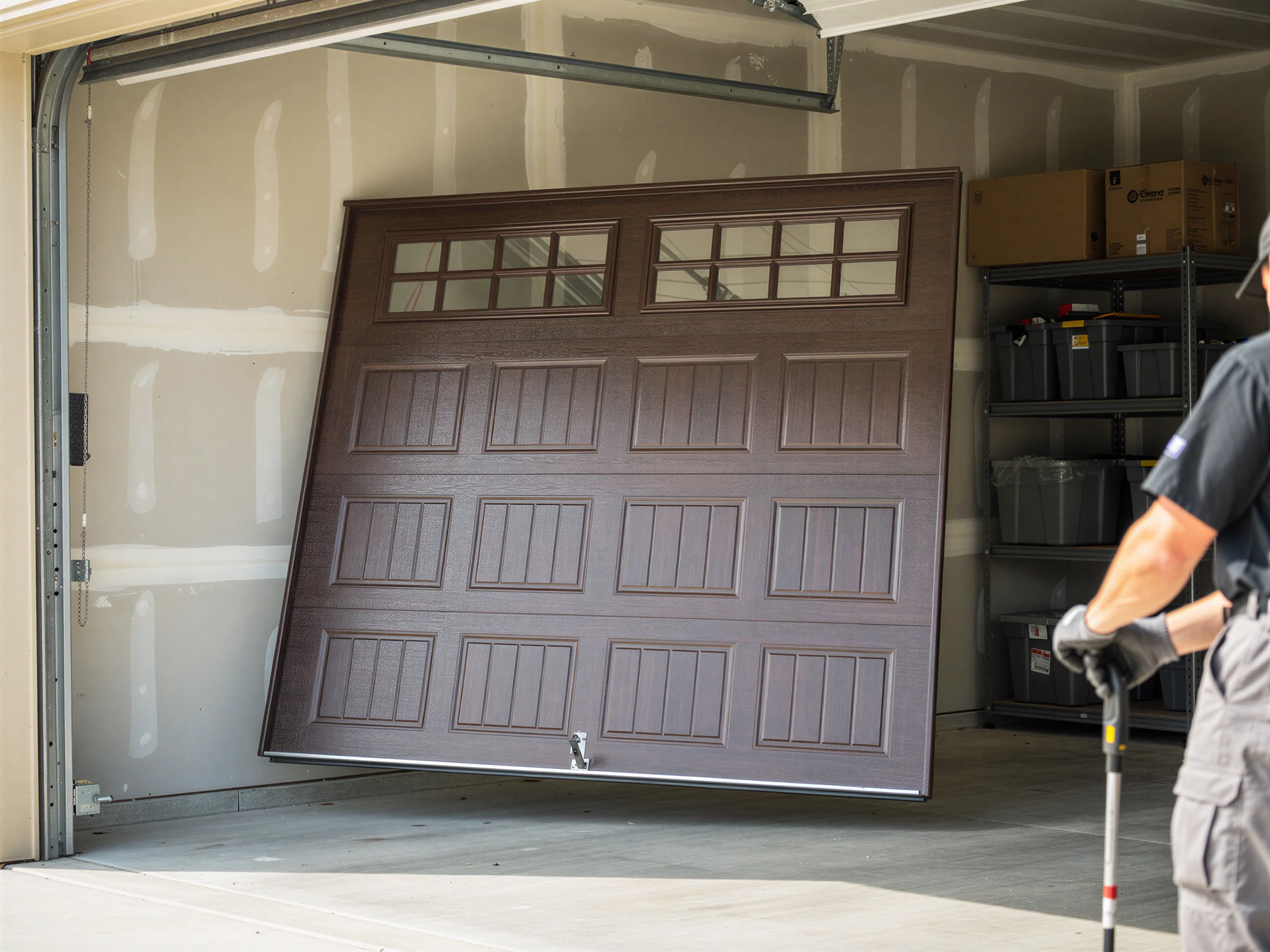
A cracked or bowed panel usually shows up as a visible split along a seam, a section that doesn't sit flush when the door is down, or a corner that's folded inward from an impact. On aluminum doors from this era you'll sometimes see the panel oil-can, flexing in and out with a dull pop as the door opens and closes.
Rust streaks running down from a hinge or corner bracket are a sign water's getting behind the panel skin, which is common once the factory finish has worn thin after decades in the sun. Daylight showing through a seam that used to be tight is another giveaway, usually meaning the panel has separated from its neighbor at the joint.
A dented bottom panel is the most common call we get, usually from a backed-in car or a dropped tool, and it's often cosmetic rather than structural, though a hard enough dent can throw off how the door tracks in its rollers. If the door is still opening and closing smoothly and only one section looks rough, that's a panel job, not a full-door replacement.
How We Fix It
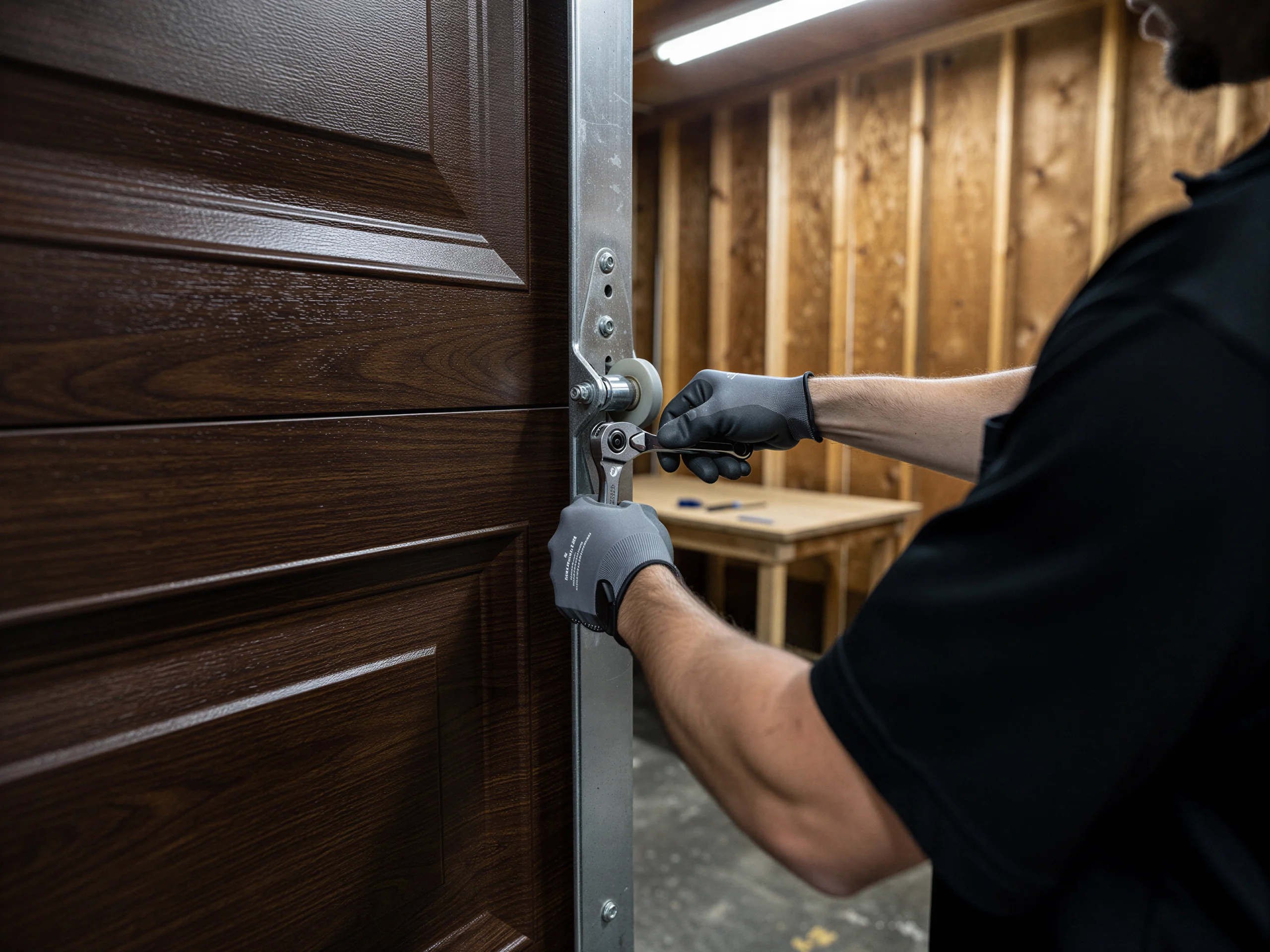
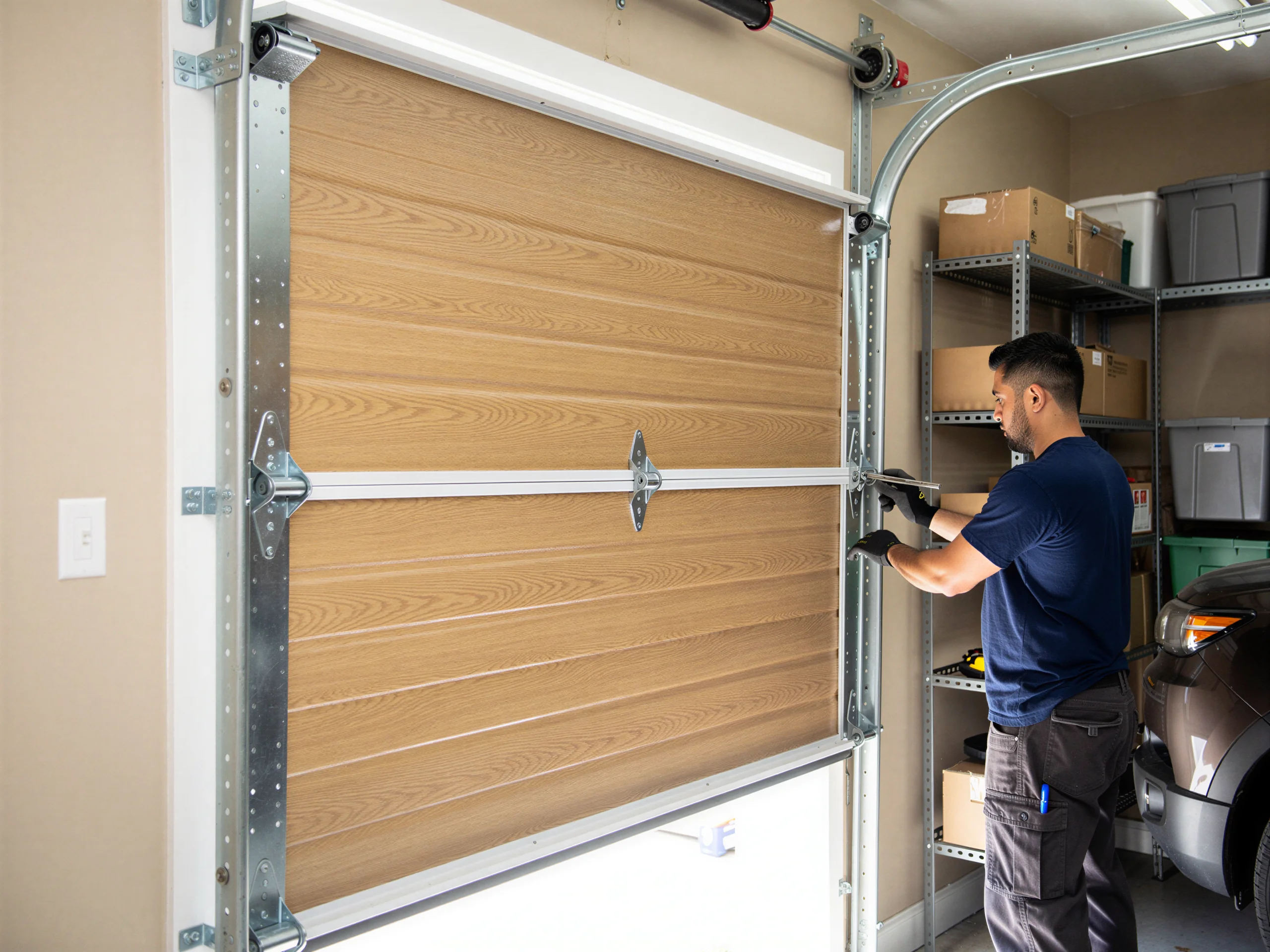
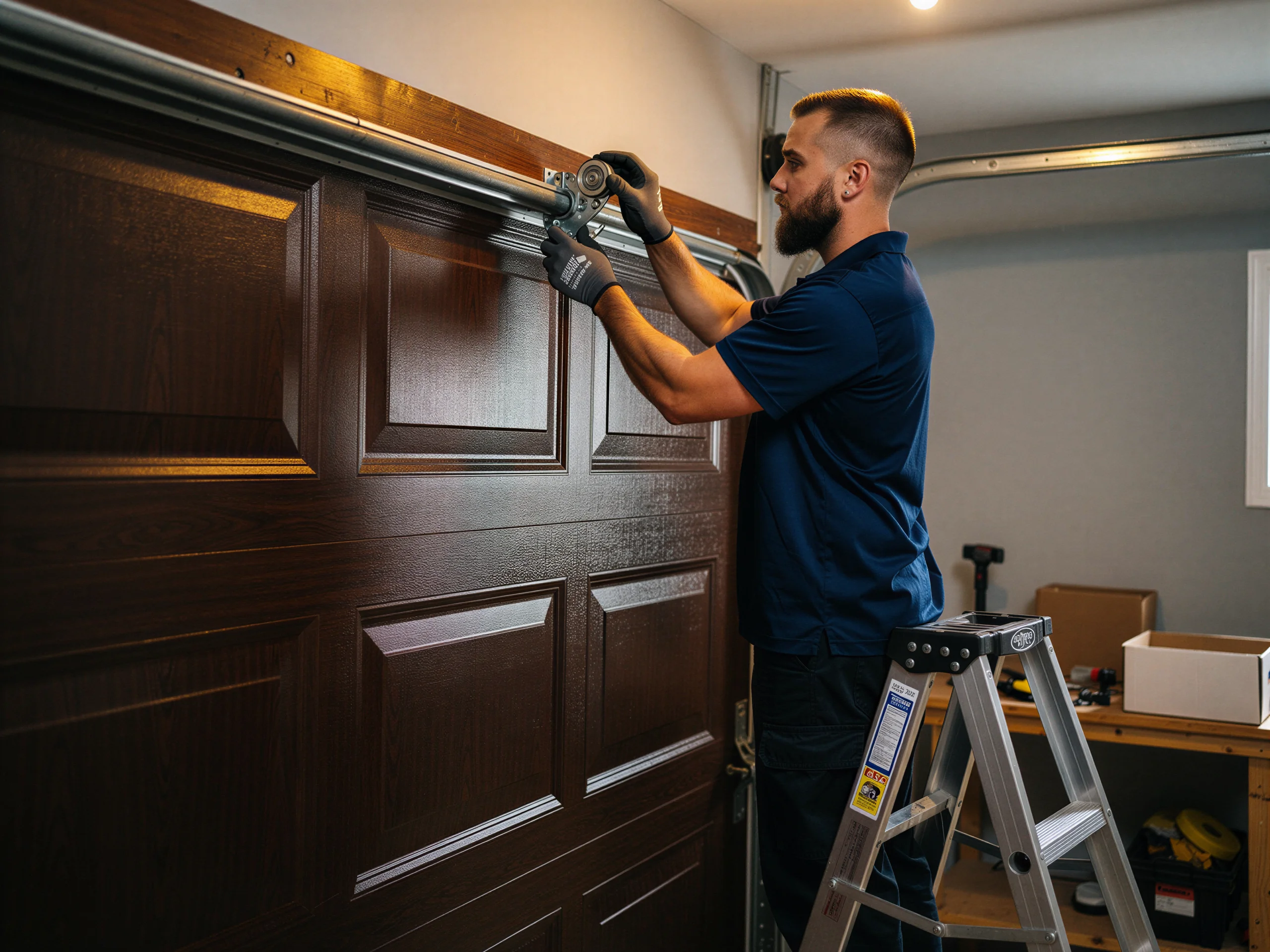
We start by matching the panel size, the groove pattern, and the color as close as we can get, then swap just the damaged section or sections rather than touching the ones still doing their job.
Individually bolted panel removal
On most doors from the 1976-2002 era the sections bolt out individually, so this doesn't mean pulling the whole door apart. Given that the median household income across the area runs around $70,343, replacing one panel instead of the whole door is usually the number that makes sense, and it's what we recommend when the rest of the door is sound.
Post-swap hinge and roller check
We only push for full-door replacement when the track, springs, or multiple panels are failing together, or when the discontinued-profile problem means a patched door would always look pieced together. After the swap we check hinges, rollers, and the track alignment on that side of the door, since a bad panel often means something nearby took stress too.
Putney to Oak Hill coverage
We serve the stretch from Putney, about 8 miles out, through Leesburg at 11 miles, to Oak Hill, 18 miles to the west, and panel stock and sizing questions are the same across that whole area.
Talk to a local pro
Garage door service in Albany?
Same-day service with honest, upfront quotes.