Time on the Job
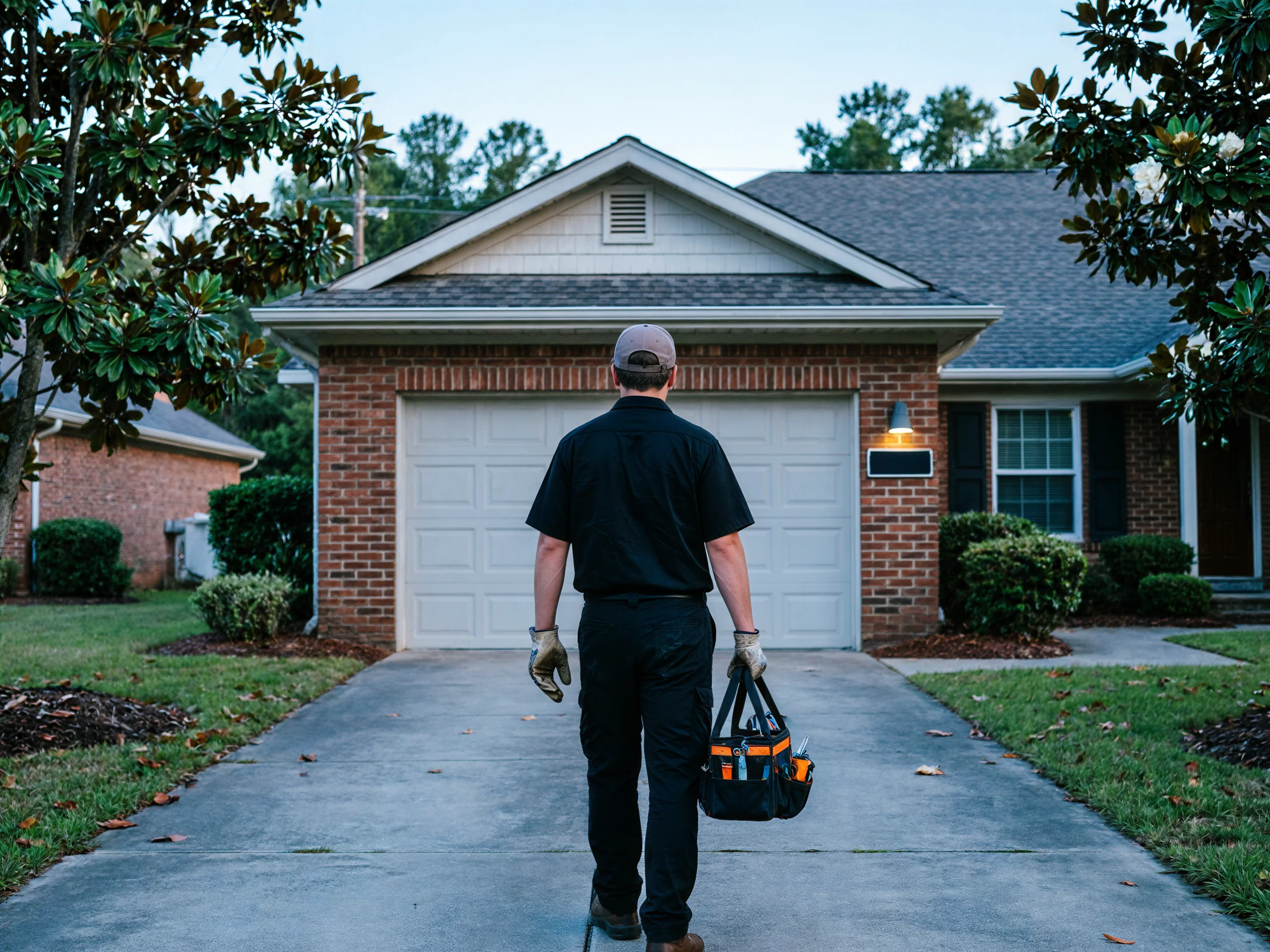
We're based in Albany, and Leesburg sits about 11 miles out, so every repair call here starts with a drive, not a walk from a depot down the street.
No same-day walk-ins
That's worth saying up front because it means we don't do same-day walk-ins - we schedule the trip. What's different about Leesburg itself is the age of the houses we're pulling up to. Across the wider Albany service area the housing stock runs 1976 to 2002, with a median build year around 1989.
Younger hardware in Leesburg
Leesburg's own median build year lands right at 2002, the newer edge of that range. That's not a small gap. A door and opener installed in 1989 has had three decades to wear through rollers, cables, and a first-generation opener board. A door installed closer to 2002 is usually still on its original torsion spring and a chain or belt-drive opener that's a model generation newer.
Tune-up versus full repair
We're not walking into the same job twice when we go from an older pocket of the service area to Leesburg. The hardware is younger, the failure points are different, and the fix often looks more like a tune-up than a full hardware swap.
What You Are Seeing
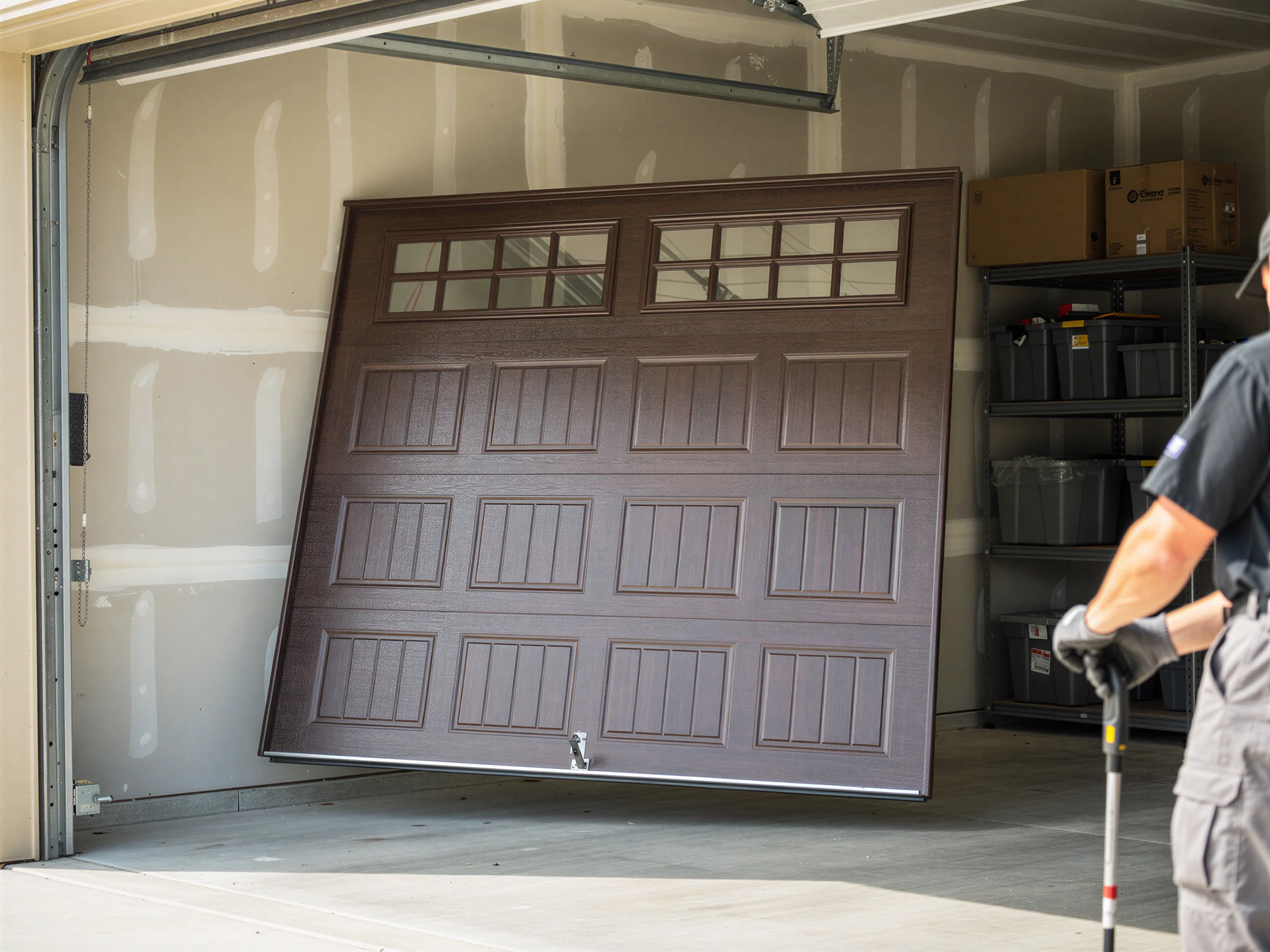
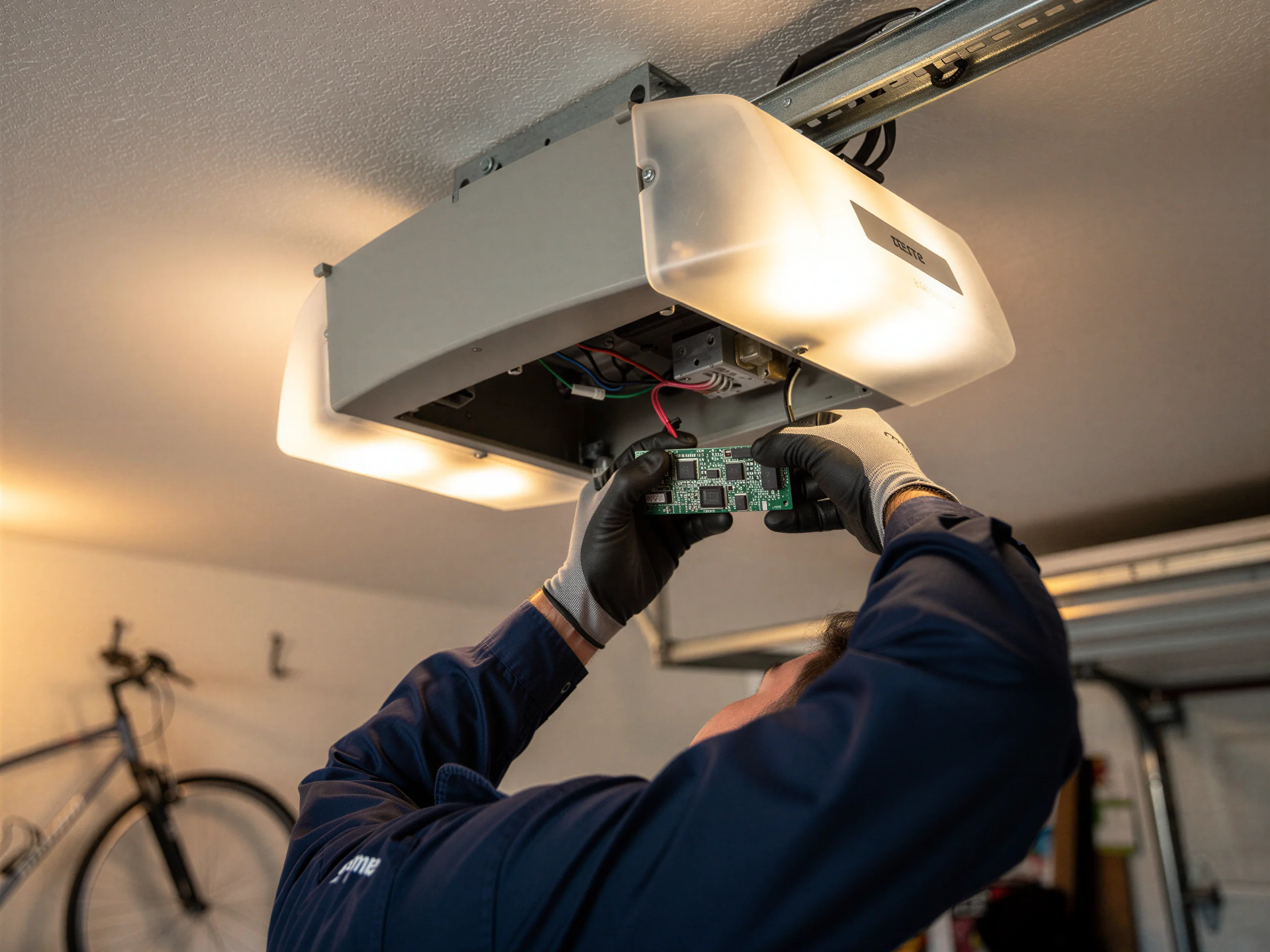
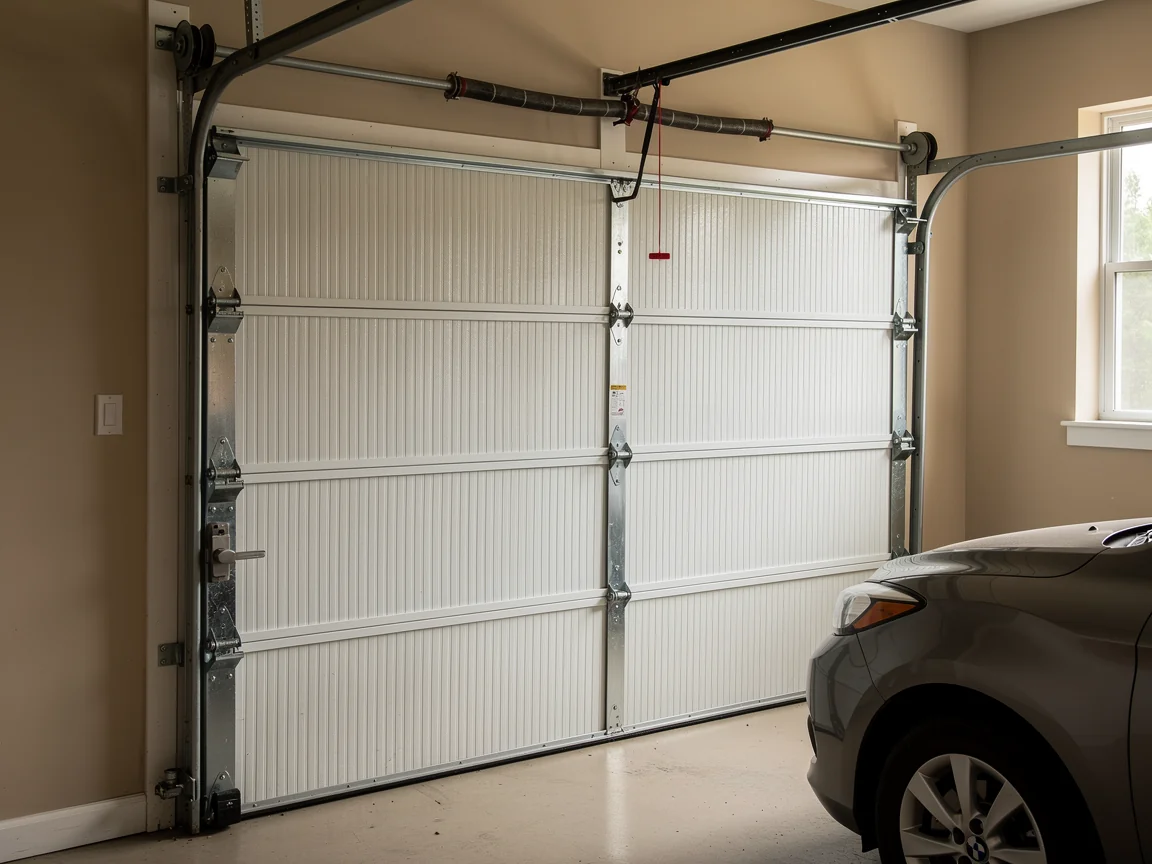
In a 2002-era house, the complaint we hear most isn't a dead spring - it's an opener that's starting to lag, grind, or drop the door short of the floor. Torsion springs rated for that era of door usually have more life left in them than one from the late 1980s, so when a Leesburg homeowner calls about a door that won't open, we're checking the opener logic board and limit switches before we assume a spring failure. Cables and rollers on houses this age are also closer to their first real service interval rather than their third. That said, 2002 isn't brand new either - it's been over twenty years, and galvanized cable and nylon rollers both have a working life measured in cycles, not years, so a house with a two-car household running the door multiple times a day can still wear through a cable well ahead of a lightly used one across town.
What You Pay
We don't have a Leesburg-specific price sheet to quote here, and listing a number without local pricing to back it would be a guess, not a fact. What we can say is that household income in this part of the service area runs around $71,071, close to the $70,343 median across the broader Albany footprint - so the jobs we price here aren't skewing toward either end of the scale. The honest limitation: if your opener board is a discontinued model from the early 2000s, parts lead time can run longer than a same-week spring swap, and we'll tell you that on the phone before we book the trip, not after we're standing in your driveway.
How We Fix It
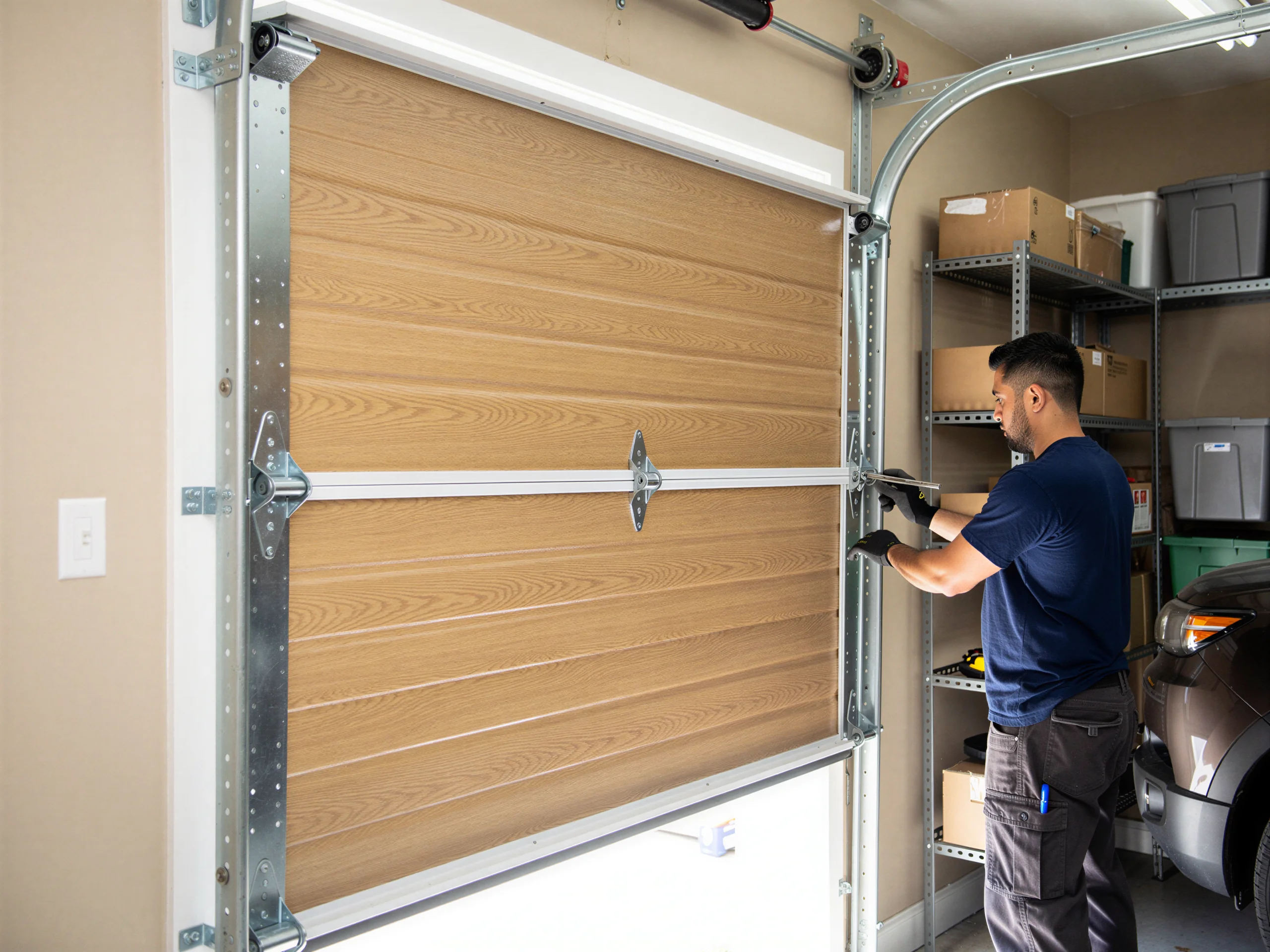
For a 2002-vintage door, we start with the opener before the spring - checking the logic board, the limit switch settings, and the belt or chain tension, since that's where this housing stock tends to drift out of adjustment first.
Spring matched to drum size
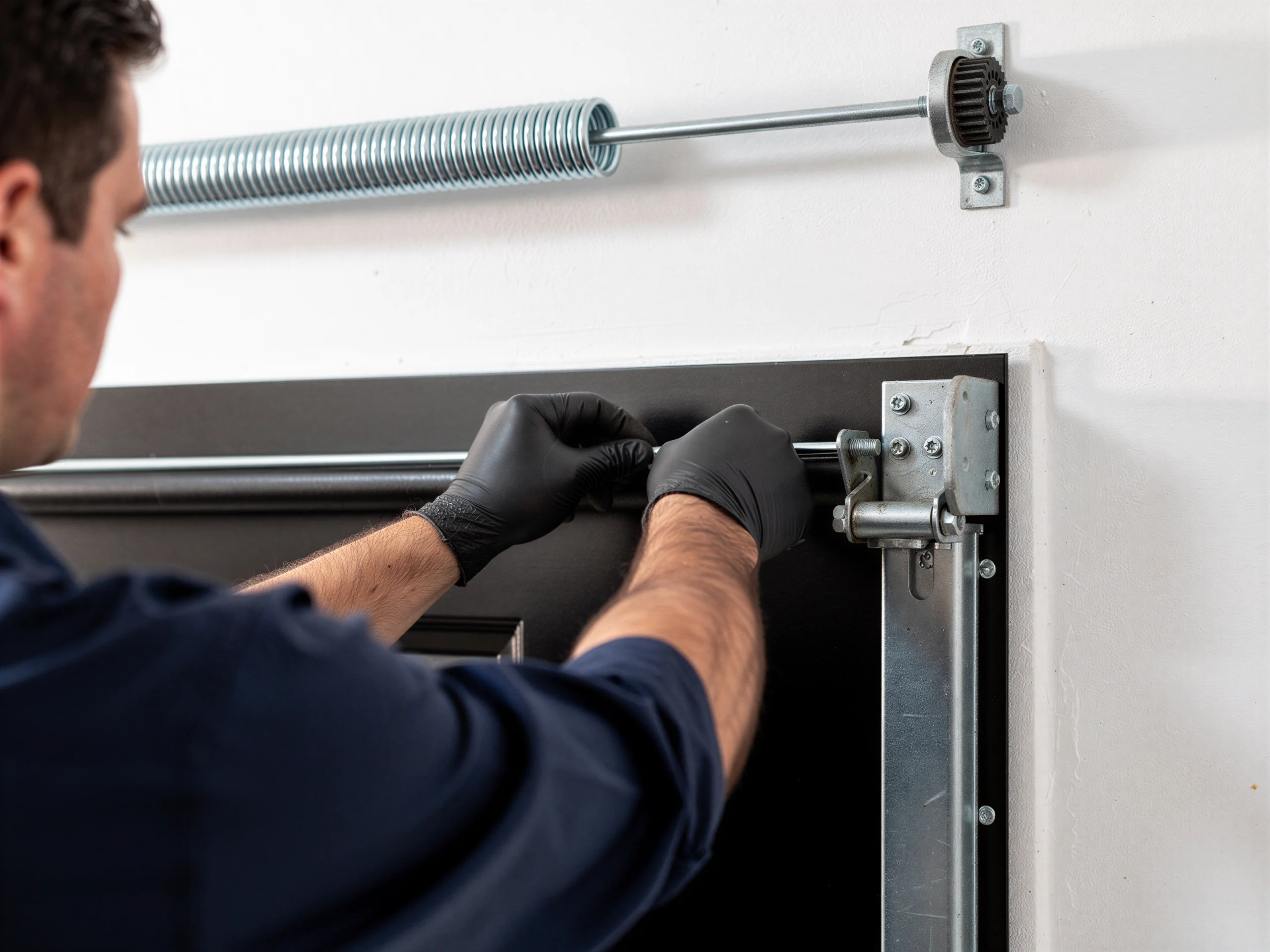
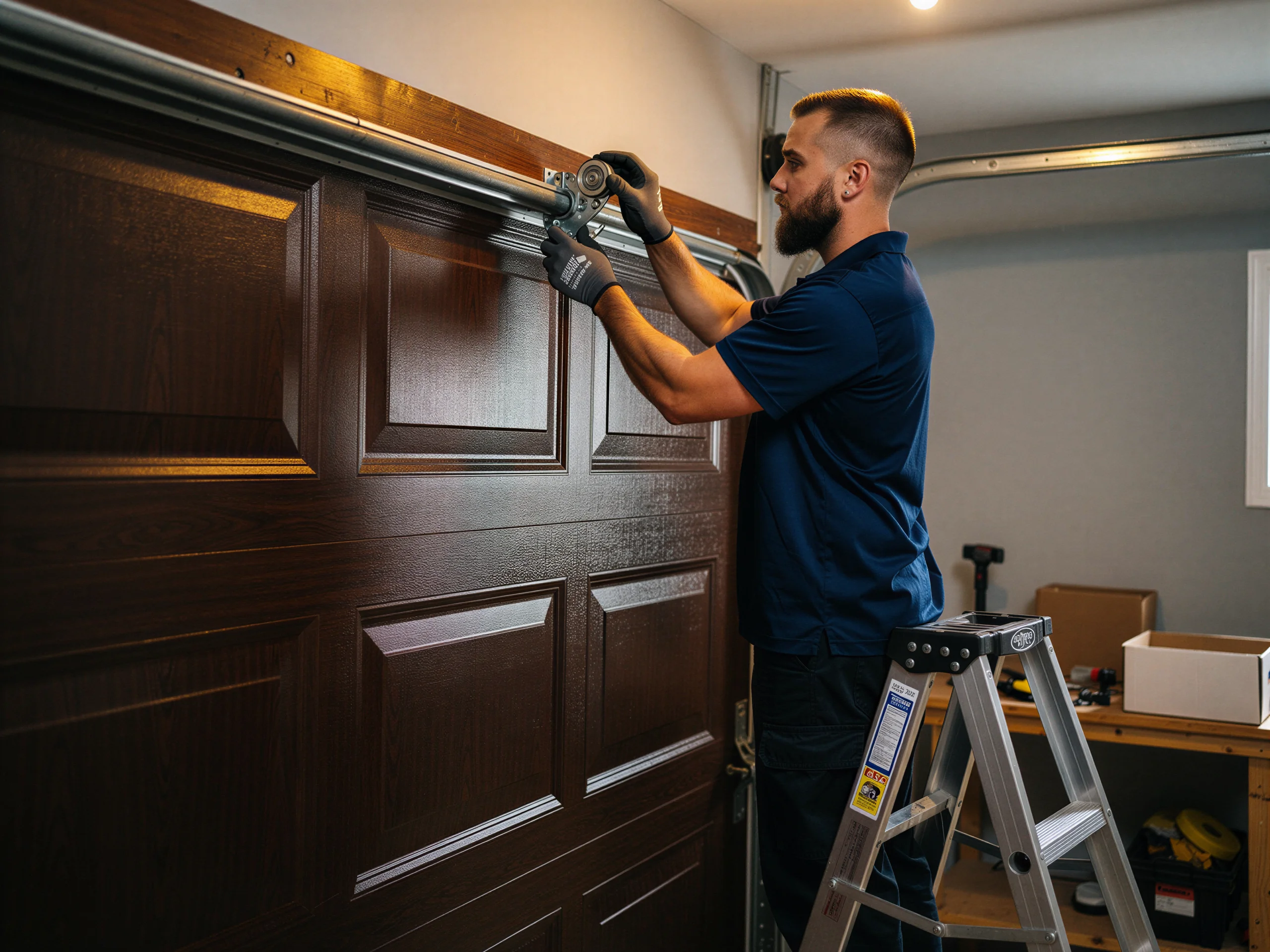
If the torsion spring is the actual failure, we match it to the door weight and the drum size on site rather than assuming it's the same spec as a 1989 door down the road, because manufacturers changed spring and shaft sizing more than once in that window.
Every-call cable and bracket check
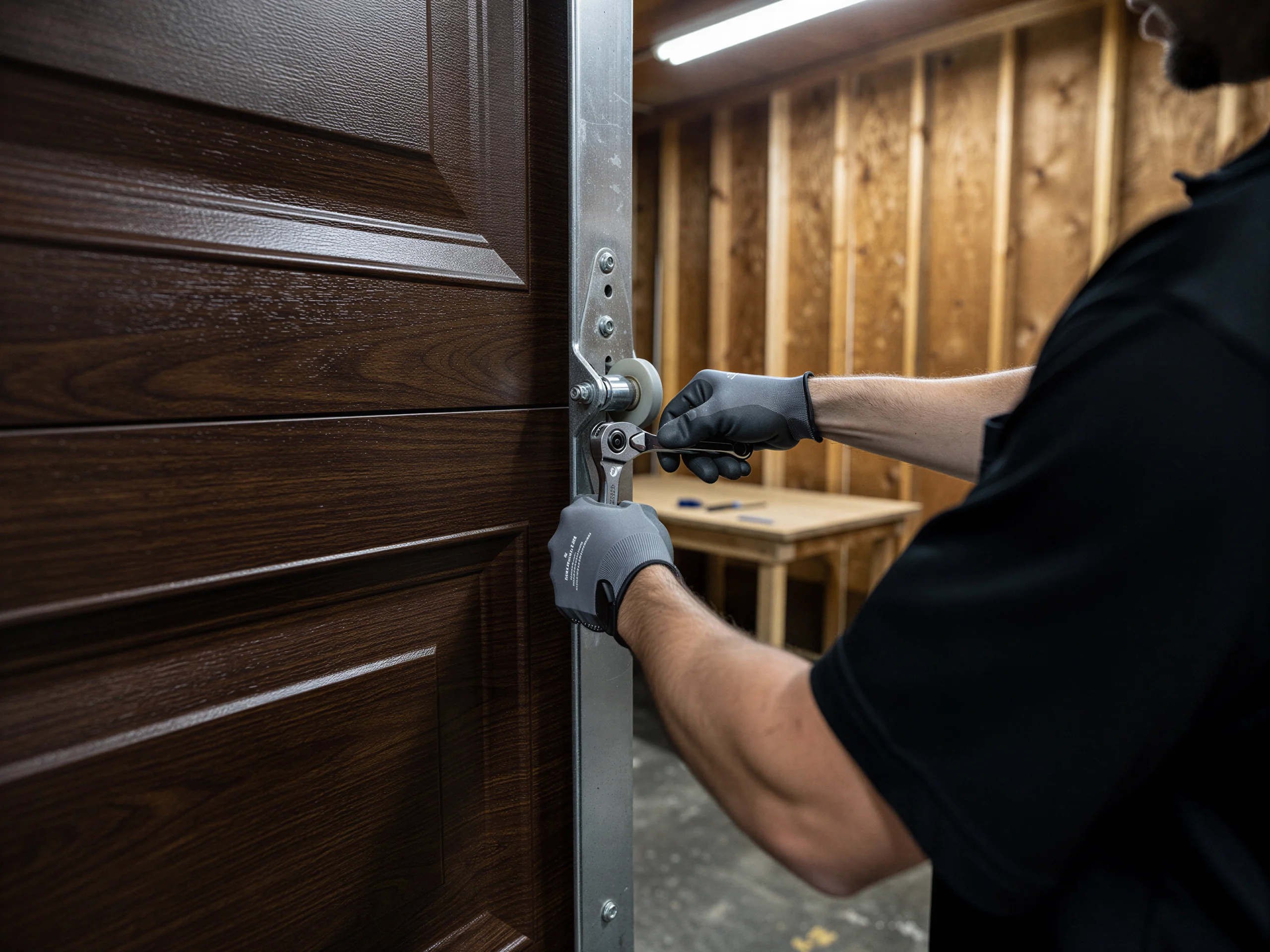
Cables, rollers, and the bottom bracket get a visual check on every call regardless of what the homeowner reported, since a fraying cable on a door this age is a safety item, not a maintenance note.
Special-order opener boards
We travel out from Albany with a stocked truck, but a specialty opener board for a less common brand from the early 2000s isn't something we carry on every run - if that's the part you need, we order it and say so up front.
The Complications
The complication in Leesburg isn't age, it's household load. With 1,342 households in this part of the service area, many of these are daily two-car garages, and a door built for moderate cycling can see more open-close cycles per week here than the same door would in a lighter-use setup. That shortens the practical life of rollers and cables even when the spring and opener are otherwise sound. The other wrinkle is that a 2002-era opener board sits right at the edge of discontinued-parts territory - not old enough to be universally unsupported, not new enough that every board is still in production. We check the model number before we quote a repair, because that one detail decides whether we're doing a same-visit fix or ordering a part.
What Causes It Around Here
The area's climate band is moderate heat rather than extreme, so we're not fighting the kind of repeated freeze-thaw cycling that cracks panels or seizes hardware in colder climates. What we do see is heat-driven wear on rubber seals and weatherstripping, and on steel track that expands slightly on hot afternoons and can bind a roller that's already a little worn. For a door built around 2002, that's usually a maintenance issue, not a structural one - lubricate the track, check alignment, replace the roller before it jumps the rail. Combine moderate heat cycling with the higher per-household cycle count we see across this part of the service area, and the pattern is steady, gradual wear on moving parts rather than sudden hardware failure. That's consistent with what we find on most calls here: a door that needs adjustment and a part or two, not a full teardown.
Talk to a local pro
Garage door service in Albany?
Same-day service with honest, upfront quotes.