Time on the Job
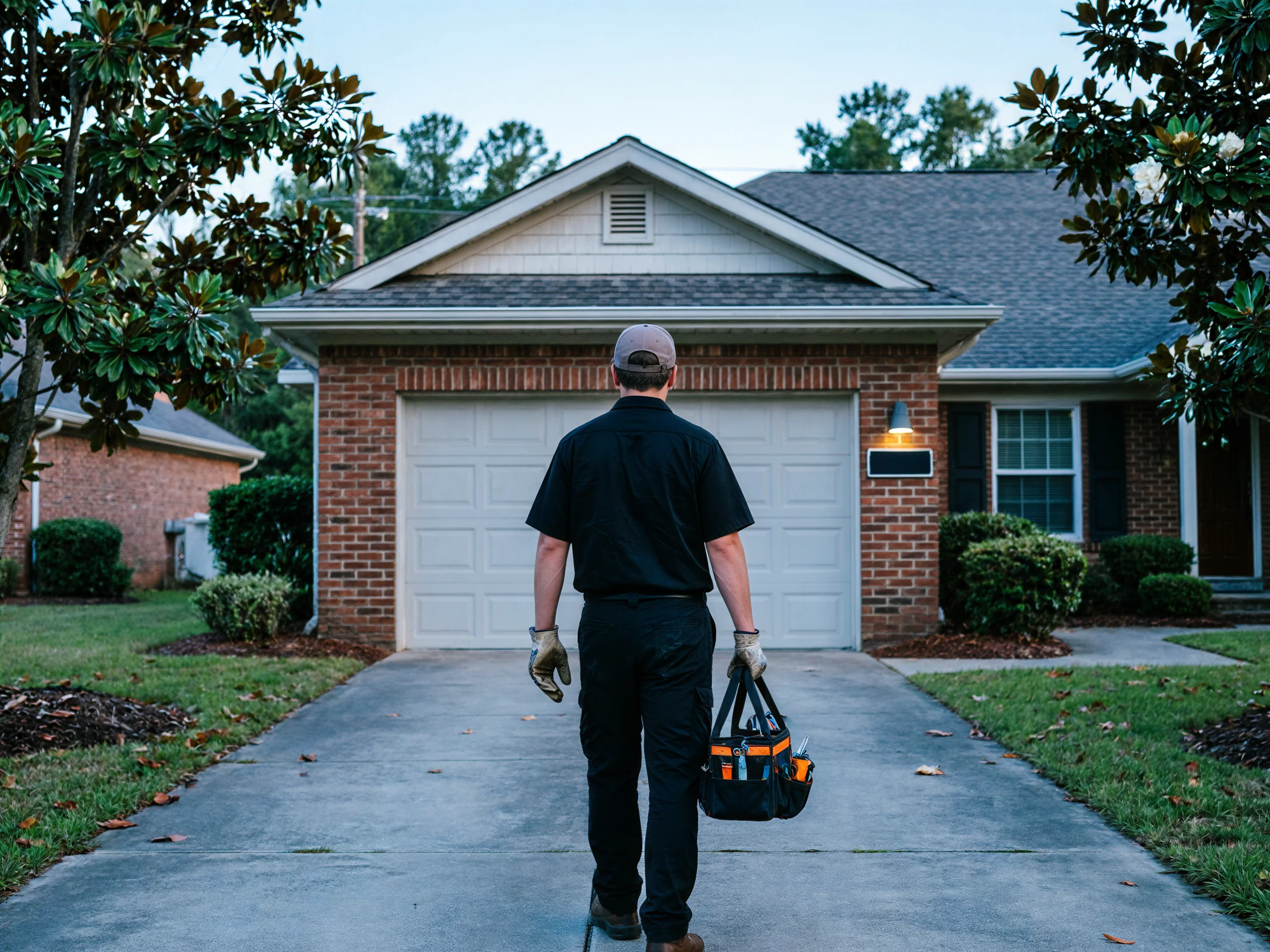
Leesburg skews newer than a lot of the territory we cover out of Albany. Across the wider service area, the housing stock runs from 1976 to 2002, with a median around 1989 and two named pockets still carrying their original 1980s and 90s doors. Leesburg sits at the late end of that window, closer to 2002, which puts it a notch past the stock that makes up most of our calls. That matters because garage door hardware changed in small but real ways through the 90s into the early 2000s - lighter-gauge tracks, more plastic and nylon rollers instead of steel, and extension-spring setups that got cheaper and more common on builder-grade doors. When a door comes off track in a house from this era, we're usually looking at a different failure point than we'd check first on an 80s door across town. We go to the roller and track alignment before we go anywhere near the springs, because that's where this generation of hardware tends to give first.
What You Are Seeing
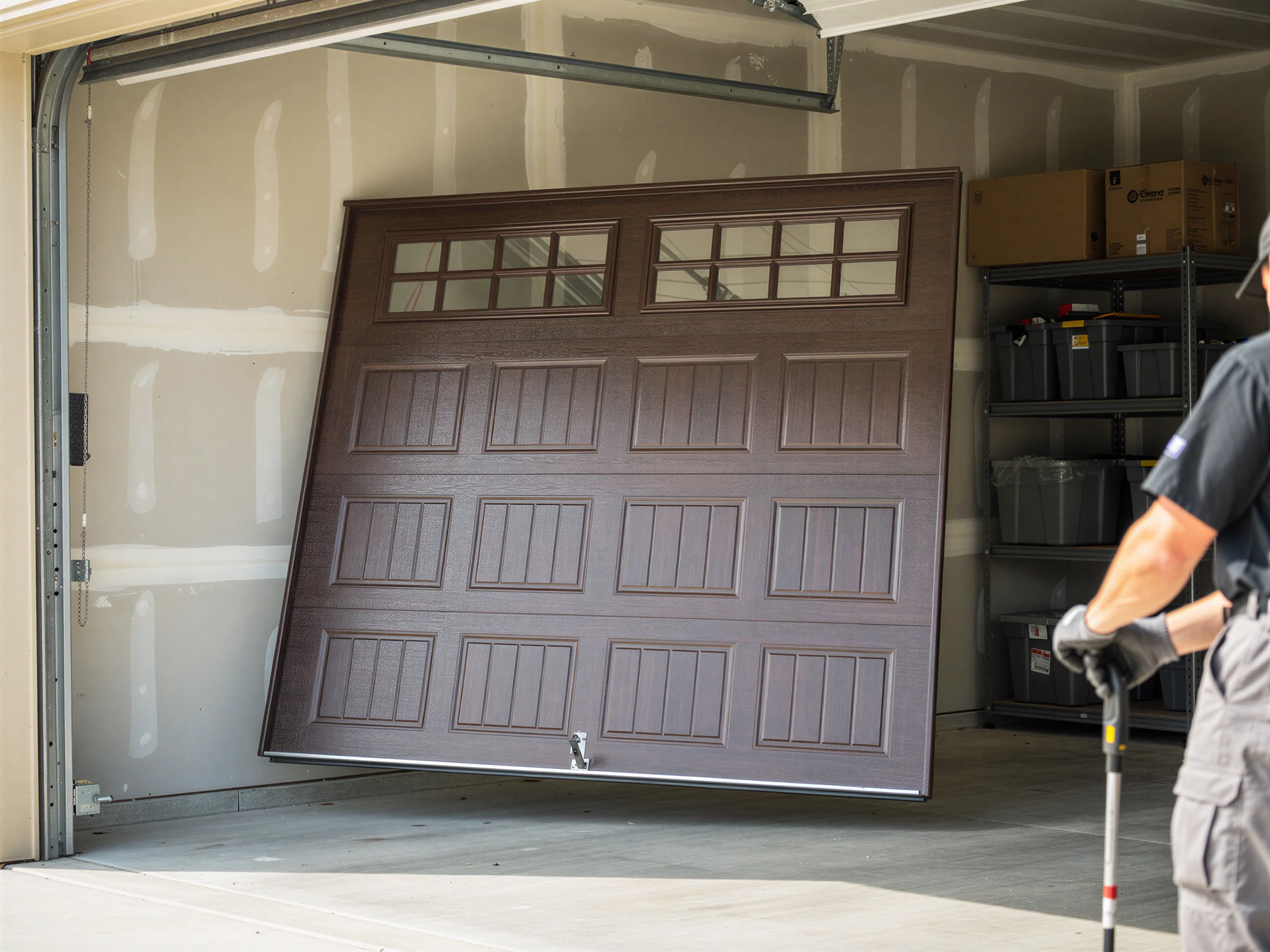
The door usually still moves, which is what throws people off. It doesn't drop and it doesn't jam solid - it just rides crooked, catching on one side, or a roller pops clean out of the track and the panel tilts.
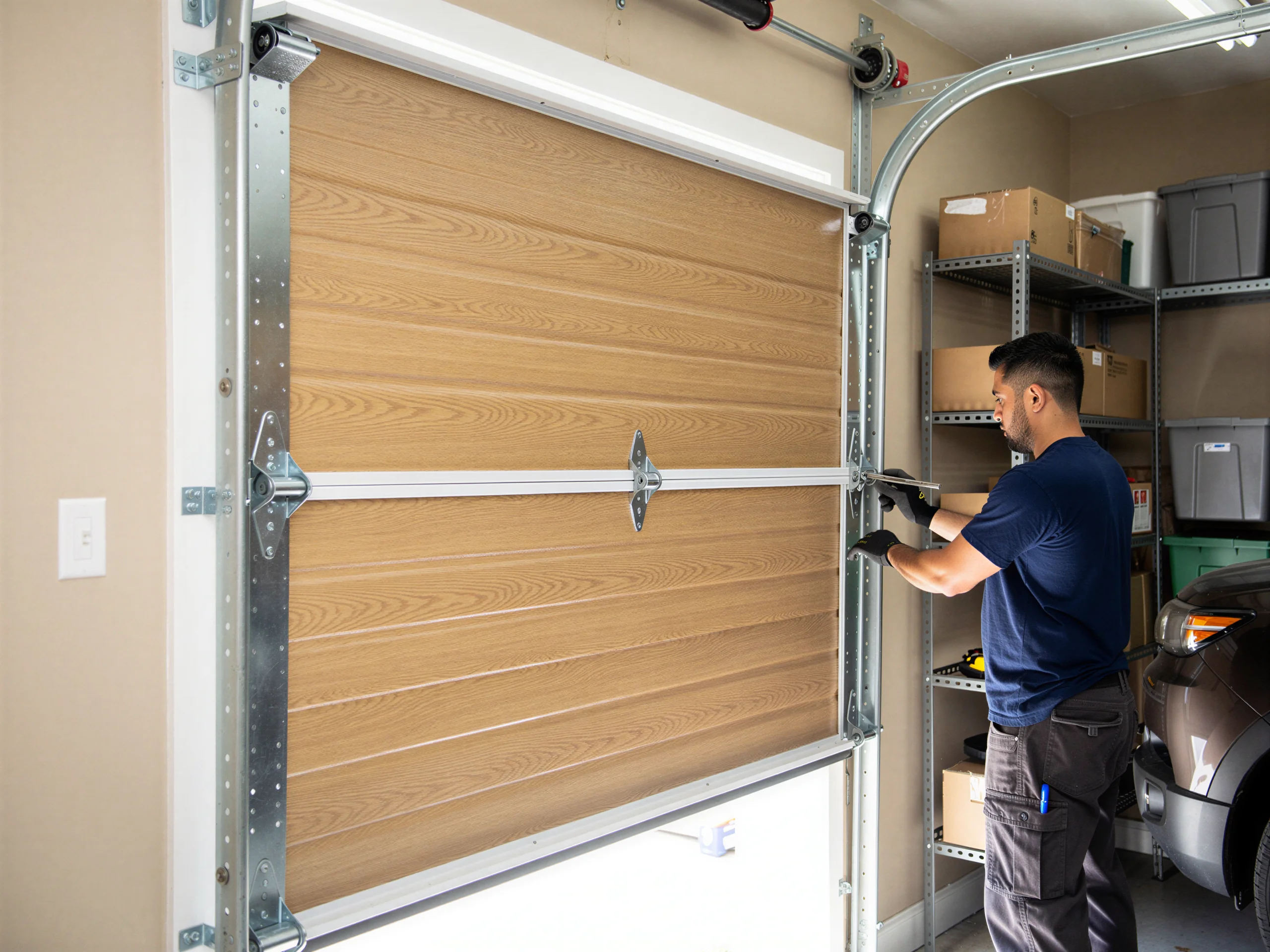
Door hanging at angle
Sometimes you'll hear a scrape or a pop right before it happens, then the door hangs at an angle or refuses to seat in the opening.
Roller knocked loose
On the lighter track sections common to houses built around this time, it often takes less than you'd think to knock a roller loose - a slightly out-of-plumb track, a roller that's worn down to the pin, or a cable that's walked off the drum on one side while the other stays put. If the door is a double, one side coming off track usually shows up as the whole panel racking sideways rather than a clean vertical drop.
What You Pay
We're not going to put a number here that isn't backed by a quote, because an off-track call can run from a quick re-seat to a track and roller swap depending on what we find once the door's open. What we can tell you is what drives the range: whether it's one roller or the whole track, whether the cable drum needs resetting, and whether the panel itself took a bend when it came off. That last one is the honest limitation worth saying out loud - if a track is bent badly enough, or a panel's creased, straightening it is sometimes a worse long-term fix than replacing that section. We'll tell you straight if that's where you are instead of forcing a patch that comes back in six months.
How We Fix It
First we check whether the track is actually straight - a level against the vertical rail tells us fast whether this is a roller problem or a track problem.
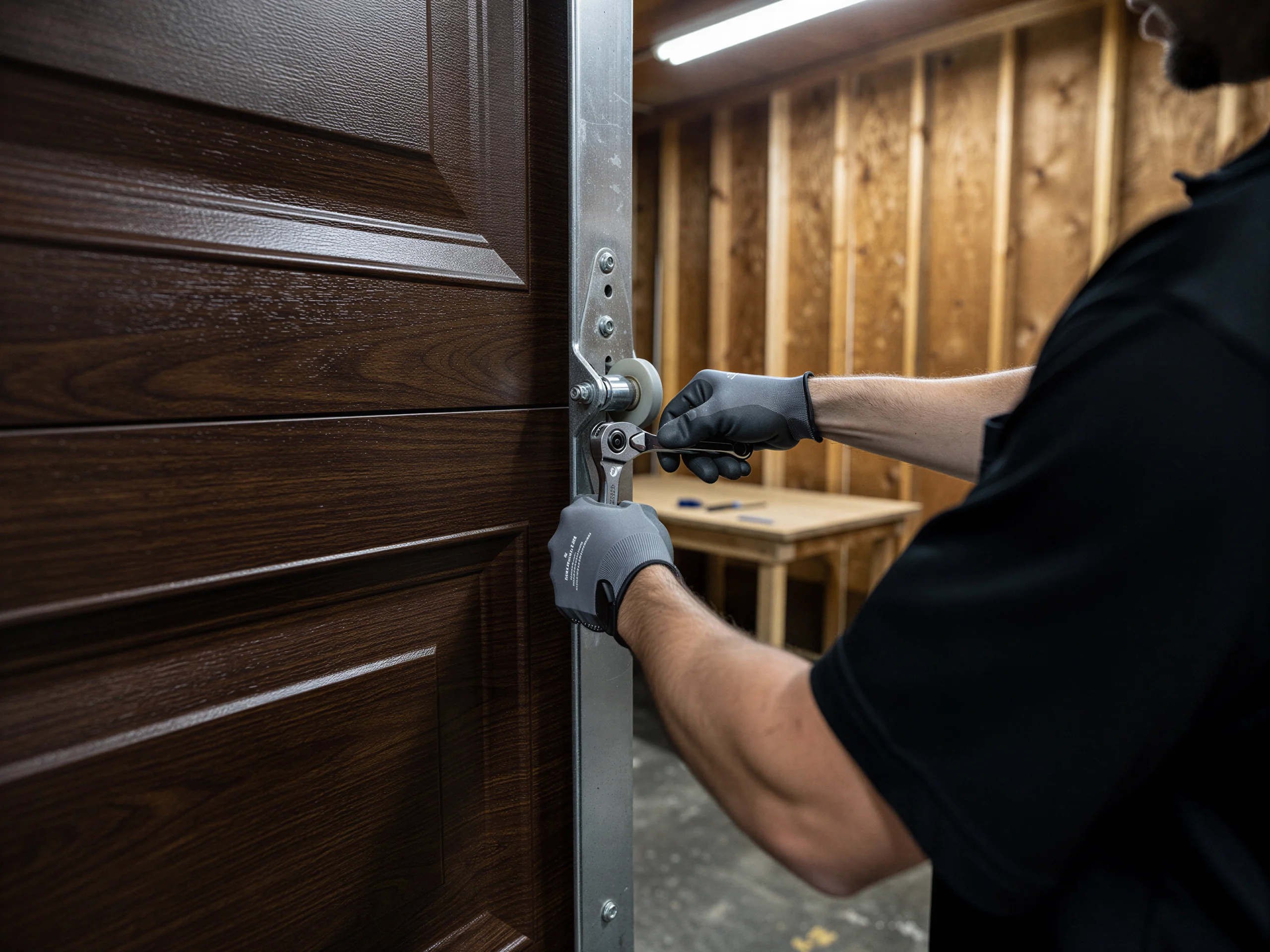
Cracked nylon roller removal
Then we look at the rollers themselves, since the nylon and plastic rollers common on doors from this build era wear down and crack rather than bending, so they come out of the track more easily than the older steel rollers do.
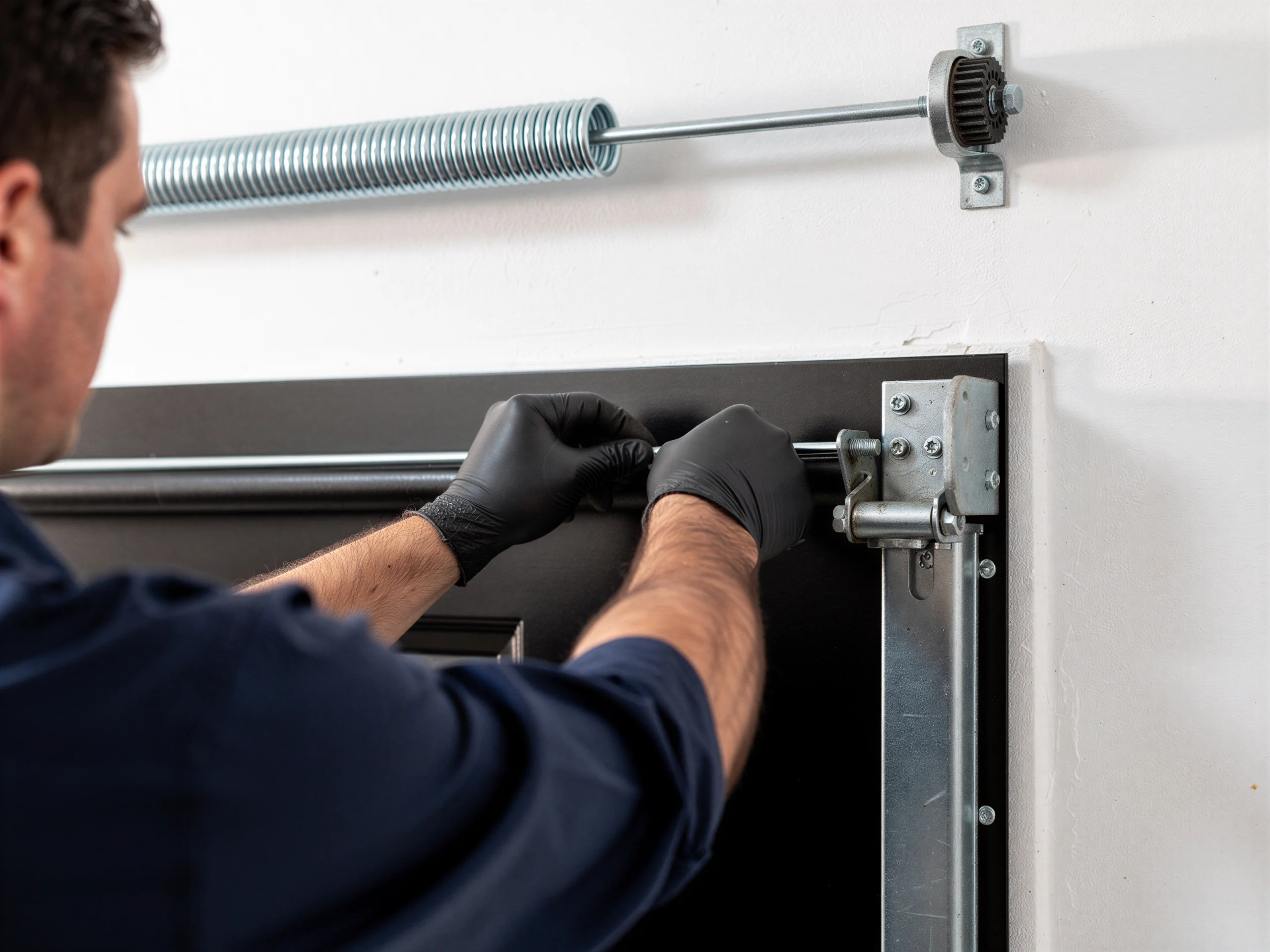
Cable reset and cycle testing
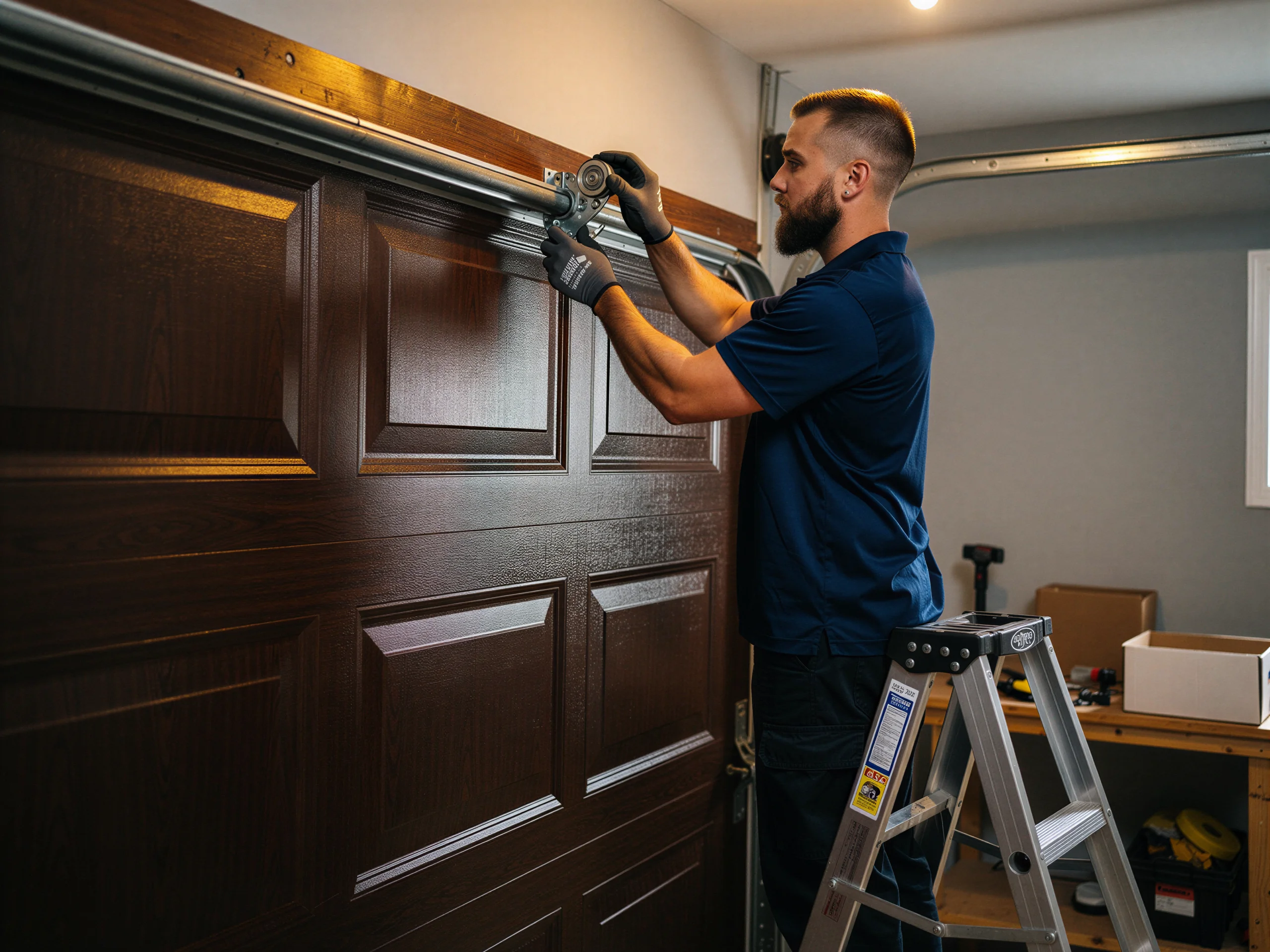
We reset the cable on the drum if it's walked, check that both sides of the door are tracking evenly, and run the door through a full cycle a few times before we call it done.
Travel limits and force settings
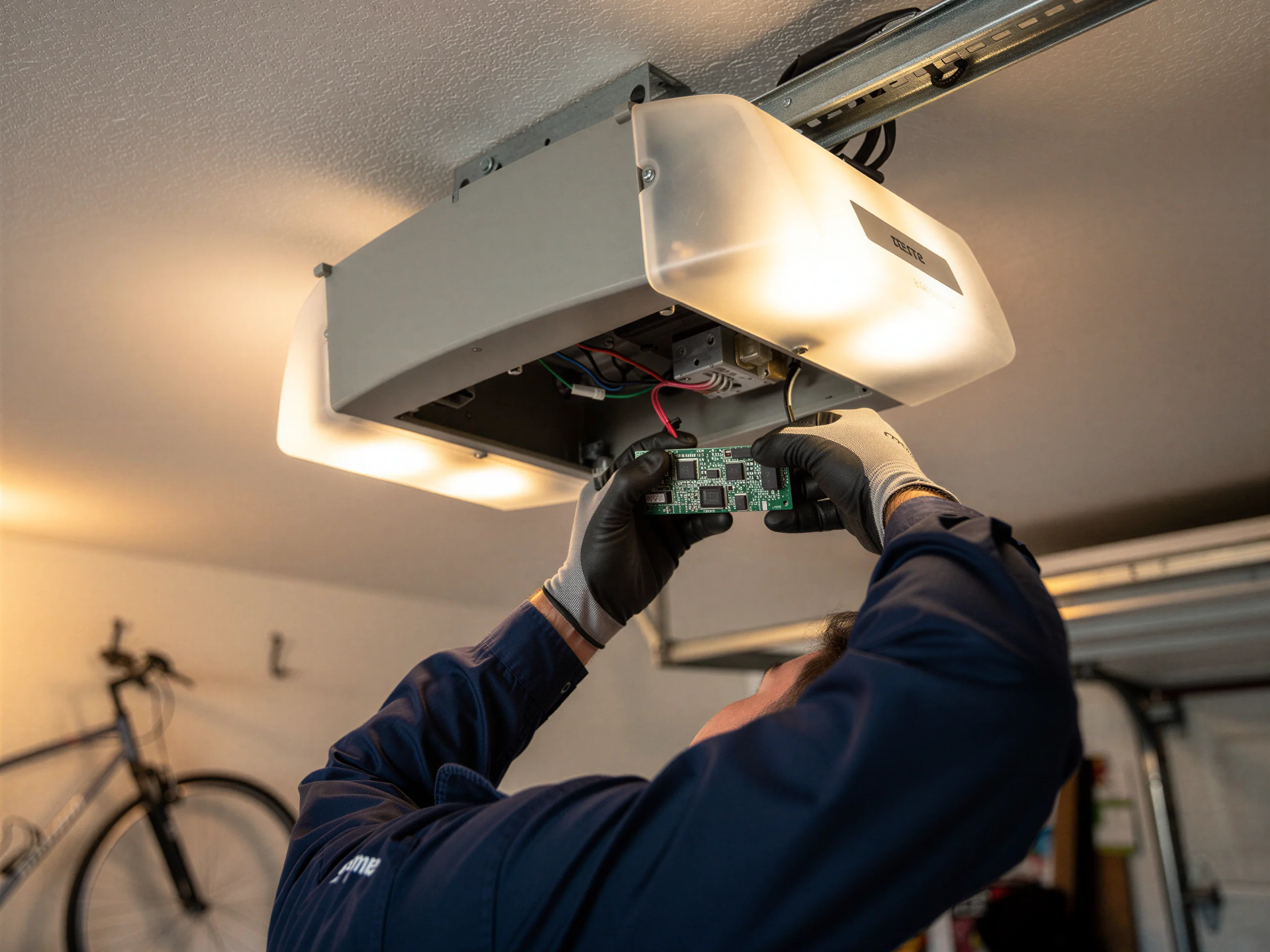
If the opener has been fighting the door while it's off track, we check the travel limits and force settings too, since a motor straining against a misaligned door can throw the opener's settings off even after the door itself is fixed.
The Complications
Double-wide doors complicate things because one side coming off track puts a twist on the whole panel, not just the affected section, and that twist can crack a panel seam if the door's run that way for even a day or two. Low-headroom setups, which turn up on garages built with a tighter stud bay, limit how much room we have to work the track back into alignment without pulling the whole rail. And if the door's been forced through its cycle after coming off track - someone trying to close it manually, or the opener grinding against it - the panel or the end stile can take damage that turns a roller fix into a panel replacement. We check for that kind of secondary damage before we quote anything, because it changes the job.
What Causes It Around Here
The biggest factor is the hardware generation itself. Leesburg's housing runs later than the 1976-to-2002 span across the broader service area, which means more of these doors came with the lighter track gauge and plastic roller hardware that became standard as the 90s wore on - hardware that's more prone to roller failure than the heavier steel setups on older stock. The region sits in a moderate-heat climate band, and repeated expansion and contraction on tracks mounted to a garage frame can work screws and brackets loose over years, enough to throw alignment off gradually rather than all at once. Leesburg also runs a median household income of $71,071, a touch above the $70,343 average across the service area, which in practice means more owners holding onto the original builder-grade door and opener rather than upgrading - original hardware that's now two decades into its working life.
Talk to a local pro
Garage door service in Albany?
Same-day service with honest, upfront quotes.