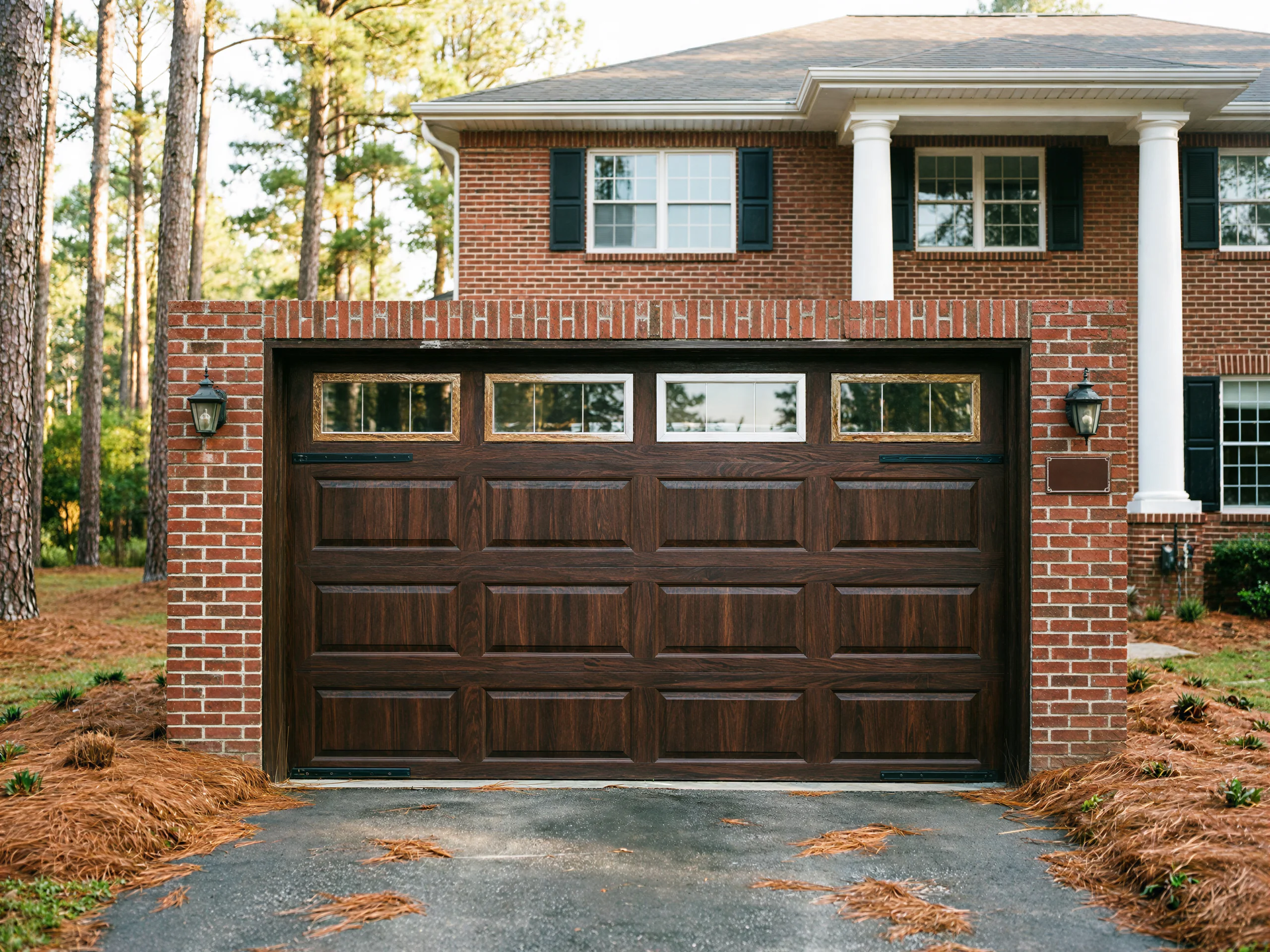
Time on the Job
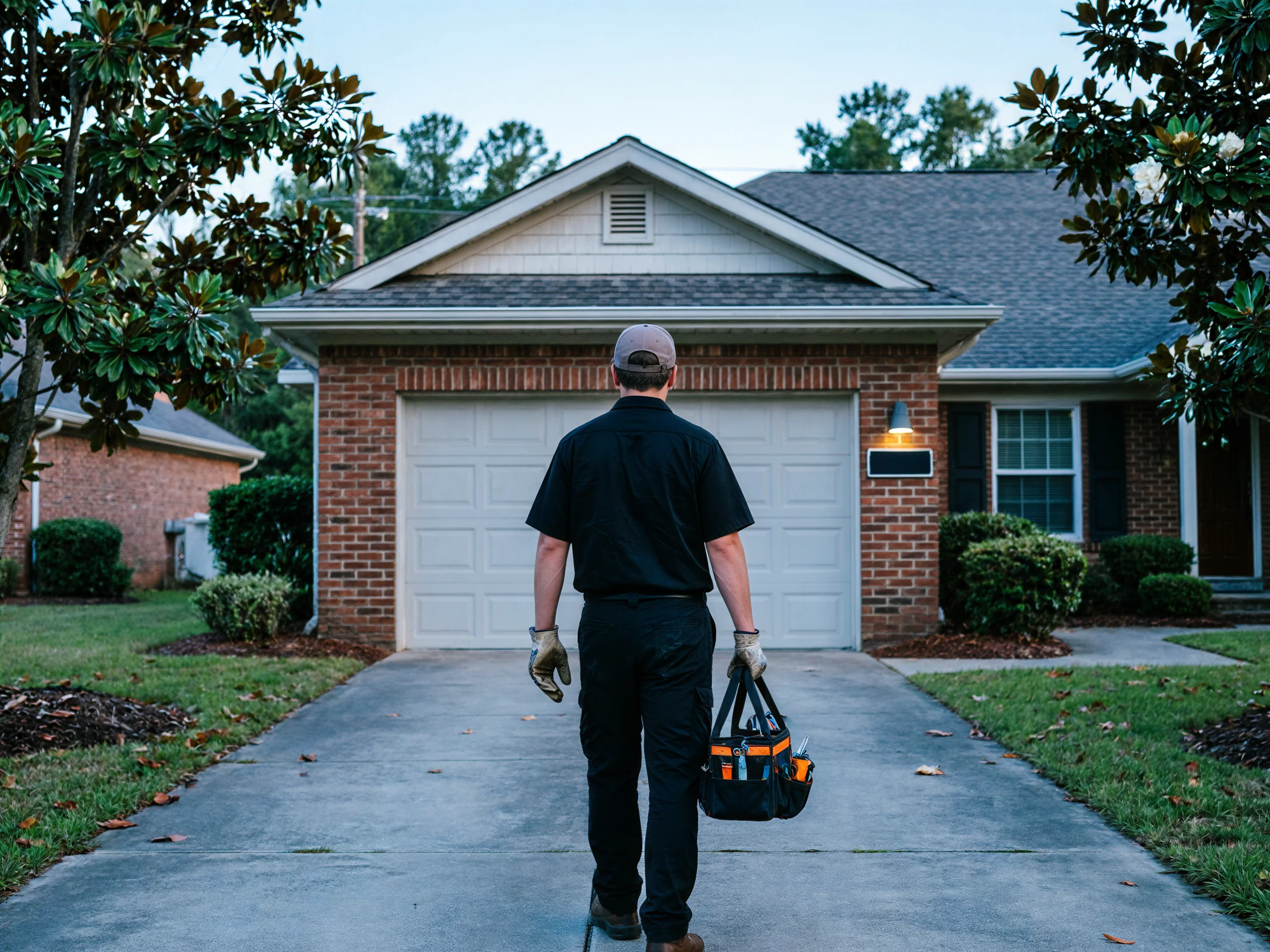
Leesburg has about 1,342 households, which is roughly half the household count of the wider Albany service area we cover. That smaller number matters for panel work: it means fewer doors cycling through, but it also means the doors that do need a panel tend to be a tighter group in age and style, because the town built up mostly around the same stretch of years. We drive out from Albany, about 11 miles, so a panel job here isn't a quick walk-over like it might be for a shop based in town - we plan the trip, bring the panel stock we think fits, and if we guessed wrong on color or rib pattern we're making a second trip. That's the honest tradeoff of covering a place this size from outside it: we know the housing stock well, but we're not next door.
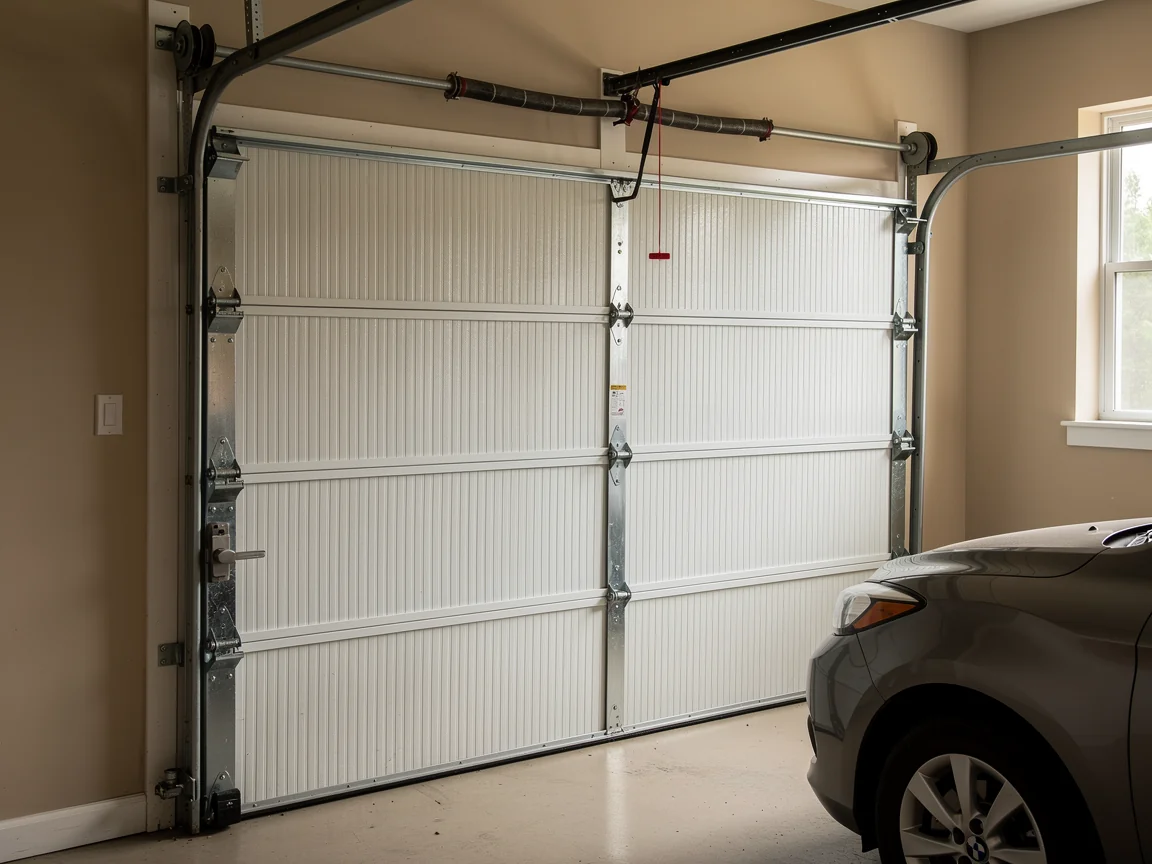
What You Are Seeing
The median year built in Leesburg lands around 2002, noticeably newer than the 1989 median across the rest of the service area we work. That difference shows up on the door itself.
Bottom sections taking impacts
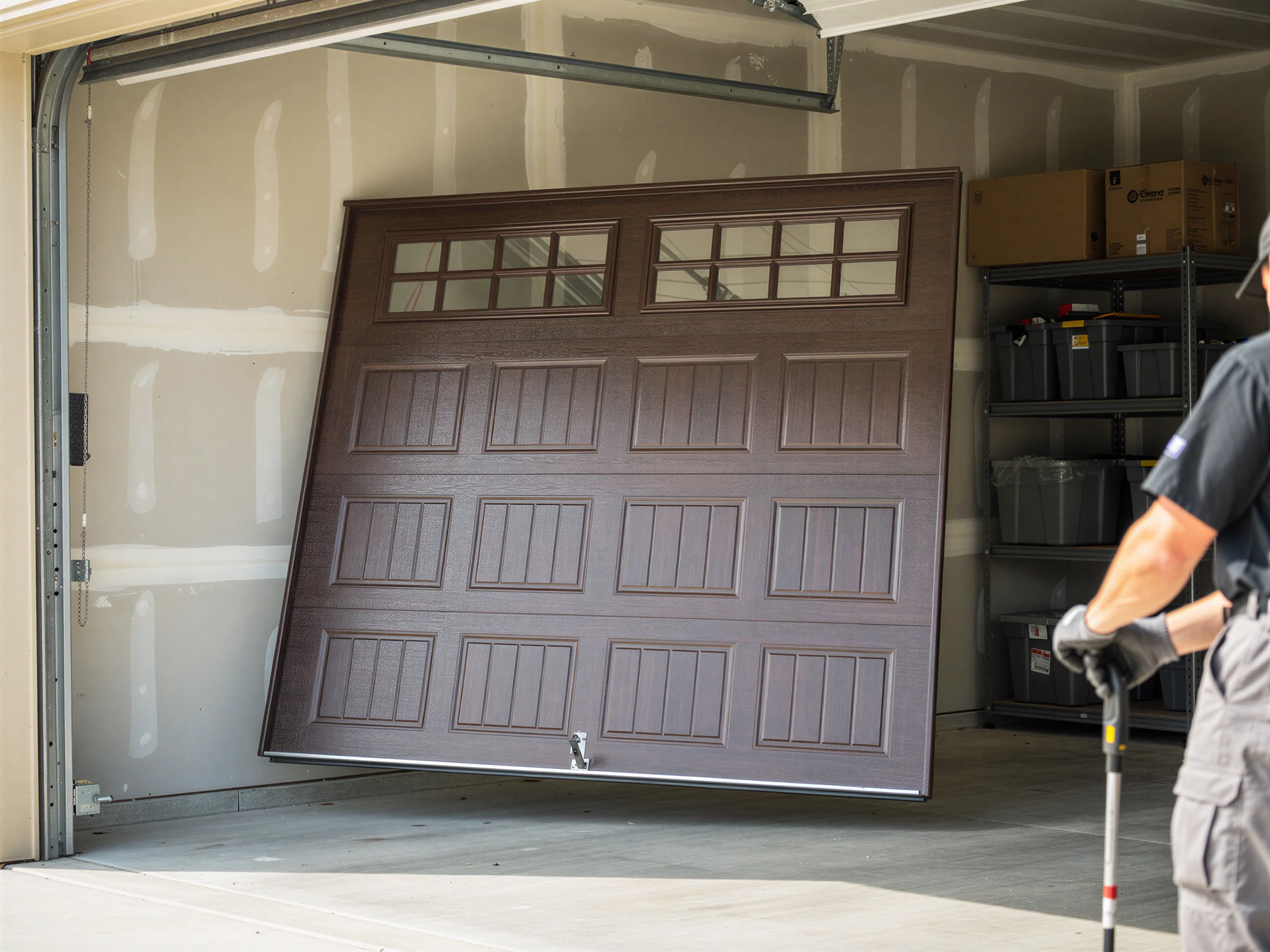
A 2002-era sectional door usually has steel panels with a factory baked-on finish, often on a track system that's held up fine, but the panel skins - especially bottom sections that take curb hits, mower kickback, or a trailer tongue - are the first thing to dent or crack.
Dents and chalky finish
Because these are newer builds, you're less likely to be dealing with a door nobody makes parts for anymore, which is good news on this job specifically. Dents, cracked seams at the hinge points, and faded or chalky panel finish from years of sun are the common calls.
Racking or bent track damage
If the whole door is racked or the track is bent along with the panel, that's a different repair, and we'll tell you straight if panel swap alone won't fix it.
What You Pay
We don't have a flat number to quote here, since panel cost depends on the door model, how many sections need replacing, and whether we can match an existing panel or need to source a near-match. What we can say: because Leesburg's housing stock runs newer than much of the rest of the area we serve, panels for these doors are generally easier to match than on an older door from the 1980s stock common elsewhere in our territory. That typically means less hunting and fewer compromises on finish. We price the job once we've seen the door, not off a phone description, because a single dented section and a four-panel color-match job are not the same invoice.
How We Fix It
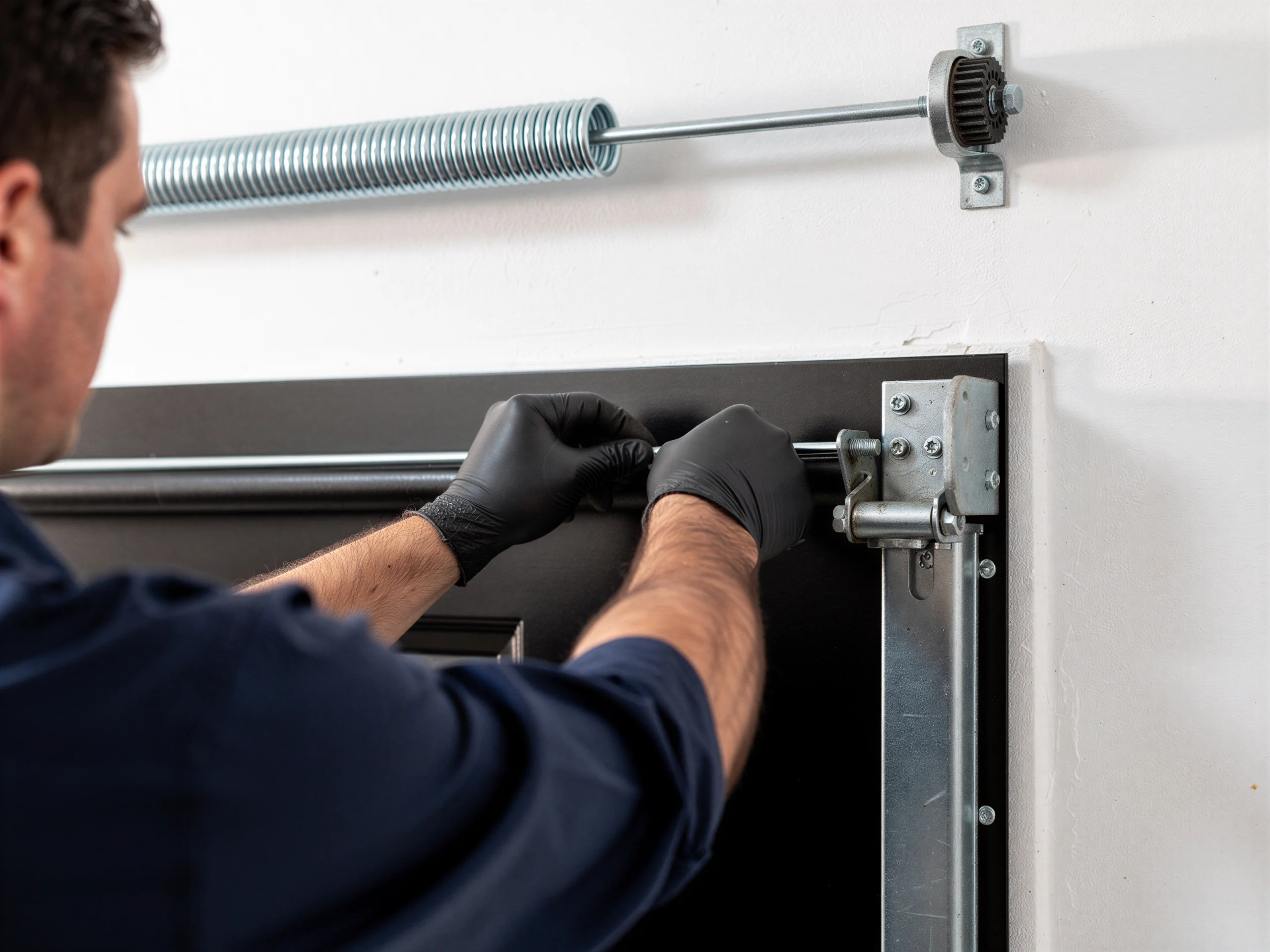
First we confirm it's a panel problem and not a track or spring problem wearing a panel's symptoms - a bowed track can make a panel look cracked when the real issue is alignment.
Measuring and matching panel sections
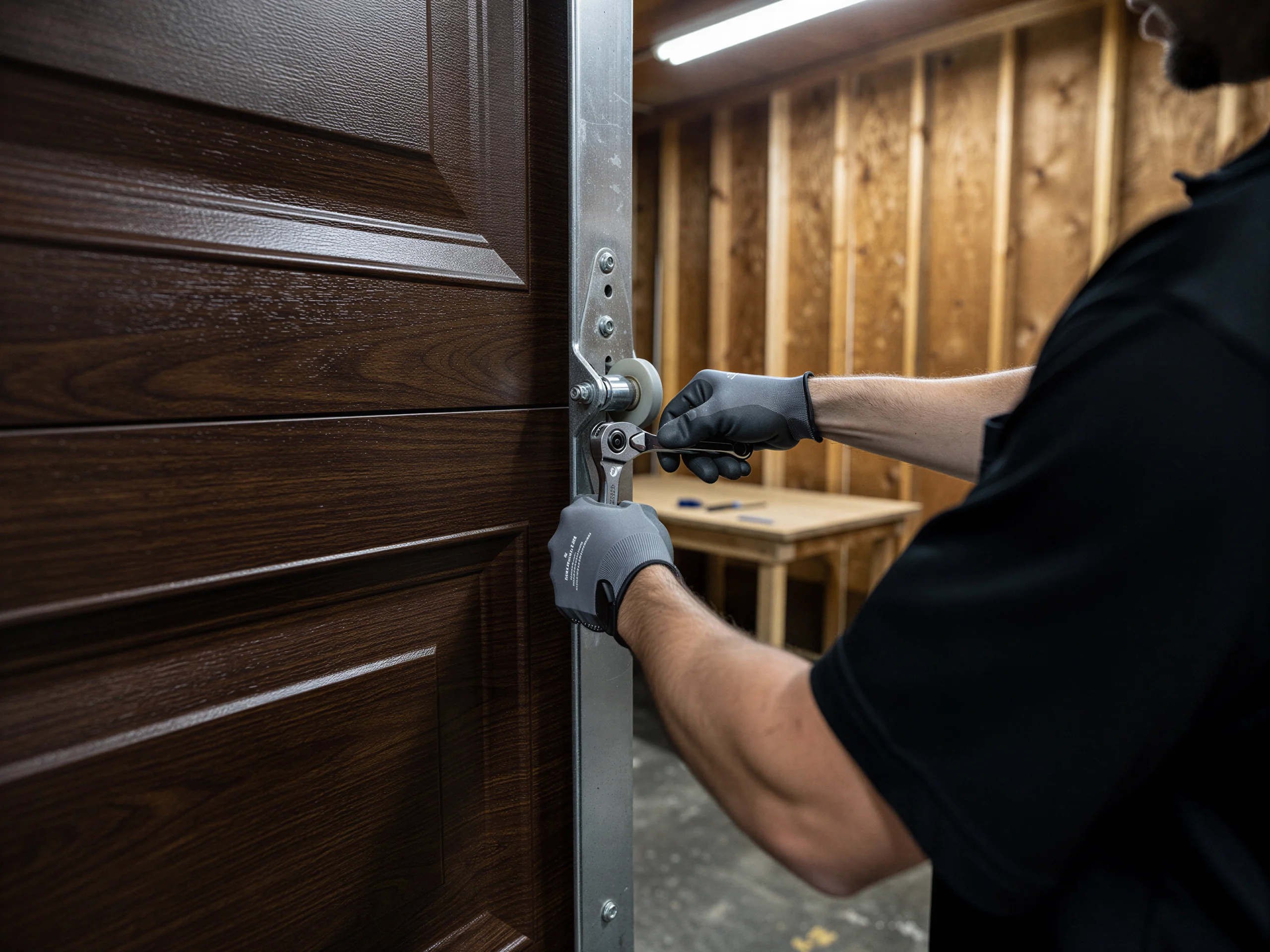
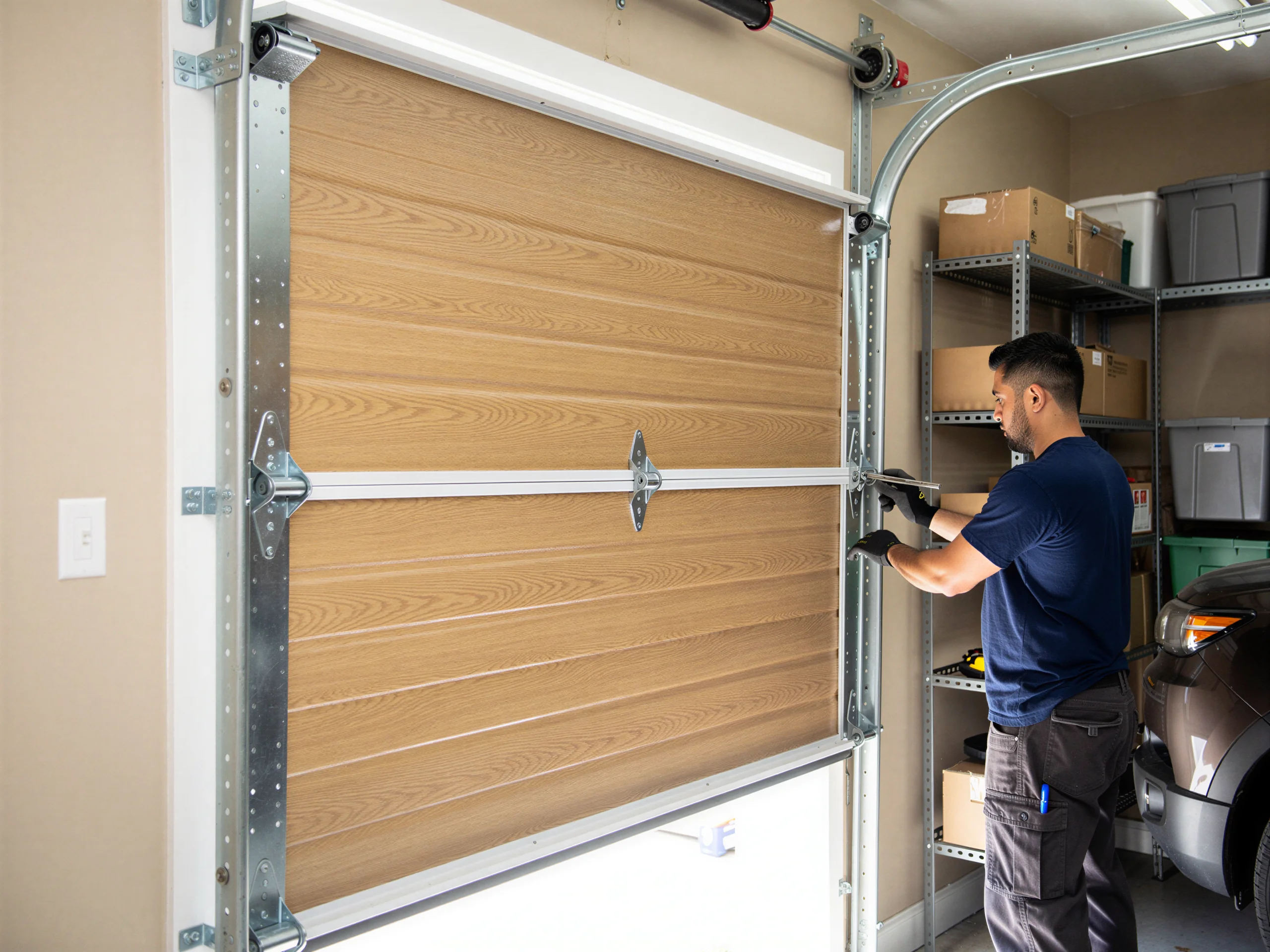
Once it's confirmed, we measure the section height and door width, match the panel style as close as we can get, and replace just the damaged sections rather than the whole door when that's structurally sound.
Standard sectional hardware
On a 2002-era build this is usually straightforward: the hardware underneath tends to be standard sectional gear, not the older side-mounted torsion setups you find on homes going back further.
Door balance check after swap
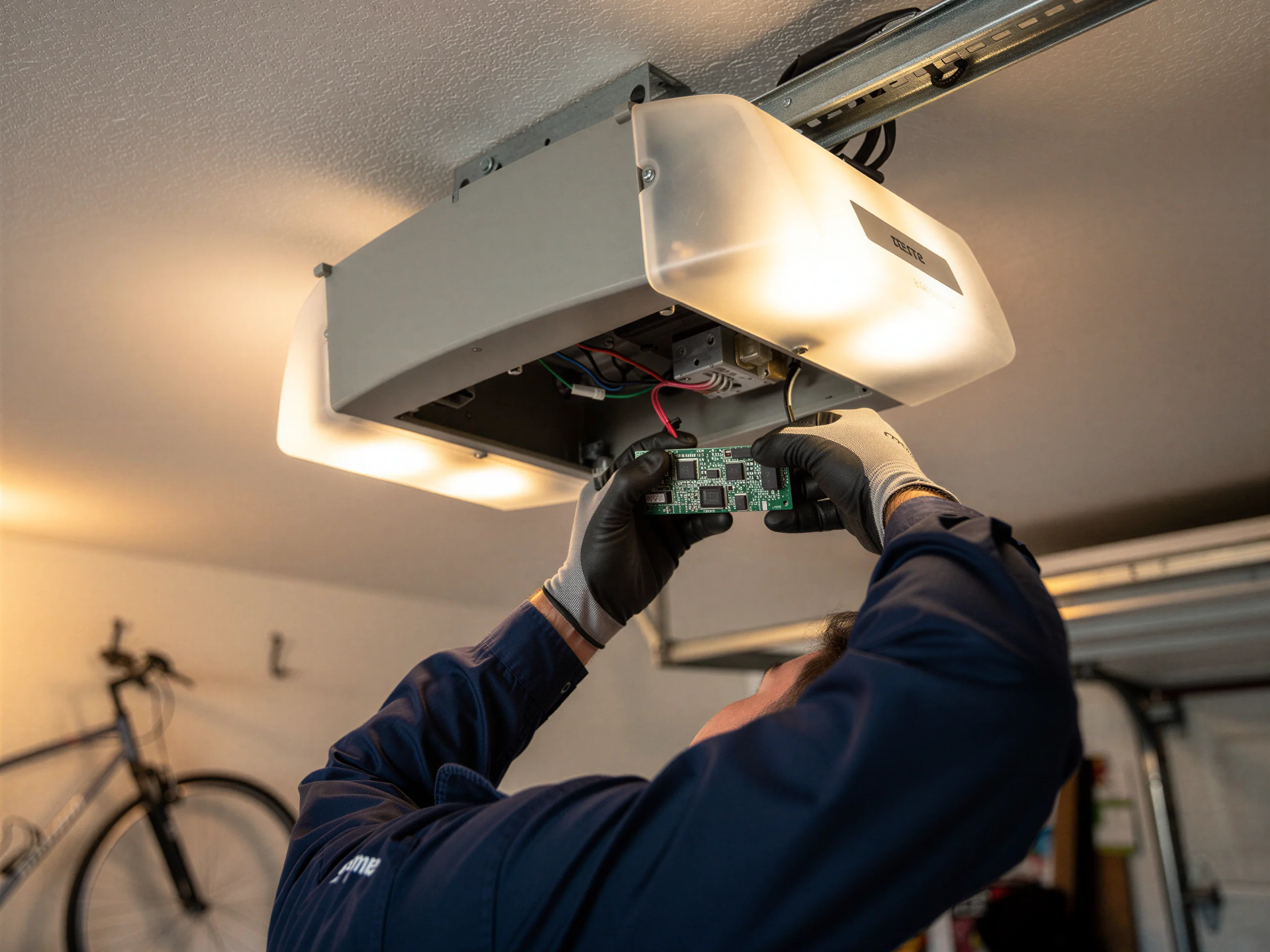
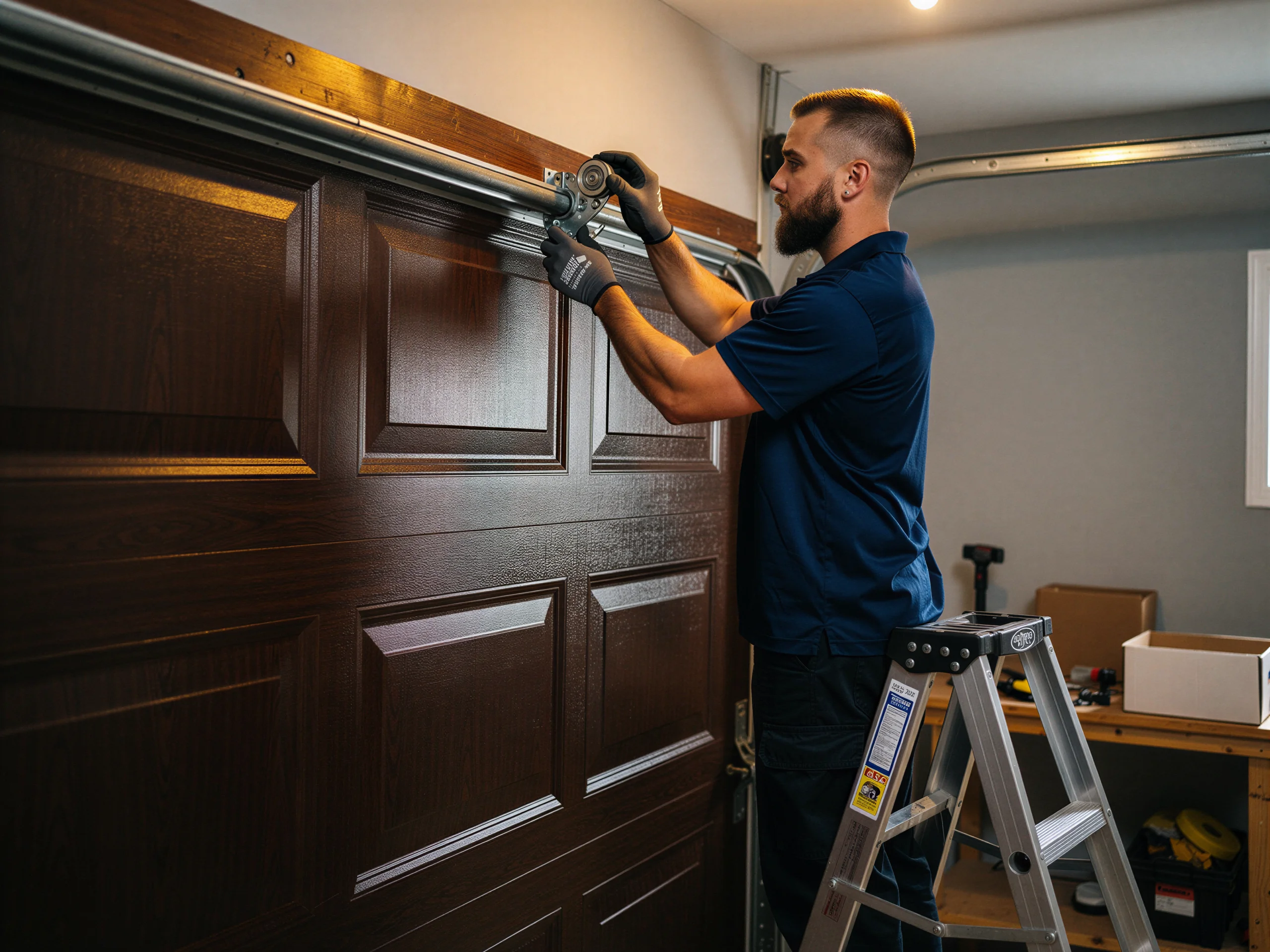
We reset the rollers and hinges on the new section, check the door balance afterward, and run it a few cycles before we call it done. If the opener was fighting the damaged panel's extra weight or drag, we check that too while we're there.
The Complications
The complication we run into most in Leesburg isn't the door's age - it's finding an exact panel match when the original run has been discontinued by the manufacturer, even on a newer door.
Matching discontinued rib patterns
A steel door from 2002 can still outlive its own panel line. When that happens we either source the closest rib pattern and finish, or we talk through replacing the full door if matching would leave a visible seam you'd notice every time you pull in.
Patch jobs costing two visits
We'll say it plainly if a panel swap isn't worth it compared to full replacement - sometimes a patch job costs more over two visits than doing it right once.
Impact damage and faded finish
Weather isn't a big driver of panel trouble here; the region sits in a moderate heat band, so we're not chasing freeze-cracked seals or ice-jammed tracks, mostly just impact damage and sun-faded finish.
What Causes It Around Here
Most of the panel calls we get from Leesburg trace back to the same handful of causes: a trailer or boat backed in too fast, a basketball hoop mounted too close to the door, lawn equipment clipping the bottom section, or just years of direct sun chalking the paint until a section finally cracks at a seam. With median household income here around $71,071, we see more owners who'd rather fix the panel properly than patch it with tape or a dent-puller kit, which is the right call on a door this age - these houses have enough life left in the rest of the door that full replacement usually isn't the first move. We don't see much weather-driven panel failure given the moderate heat band this area sits in; it's almost always something that hit the door, not something the climate did to it.
Talk to a local pro
Garage door service in Albany?
Same-day service with honest, upfront quotes.